The E2G Portal: enhancer–gene predictions across 1,600+ cell types
A major milestone in our efforts to map enhancers and interpret variants in the human genome: the E2G Portal, now live at e2g.stanford.edu.
The portal collates our predictions of enhancer–gene regulatory interactions across more than 1,600 cell types and tissues. Here are a few things you can do with it.
Look up your favorite GWAS variant. Search a variant to find its predicted target genes and cell types — and see which variants in linkage disequilibrium with your query also overlap enhancers.
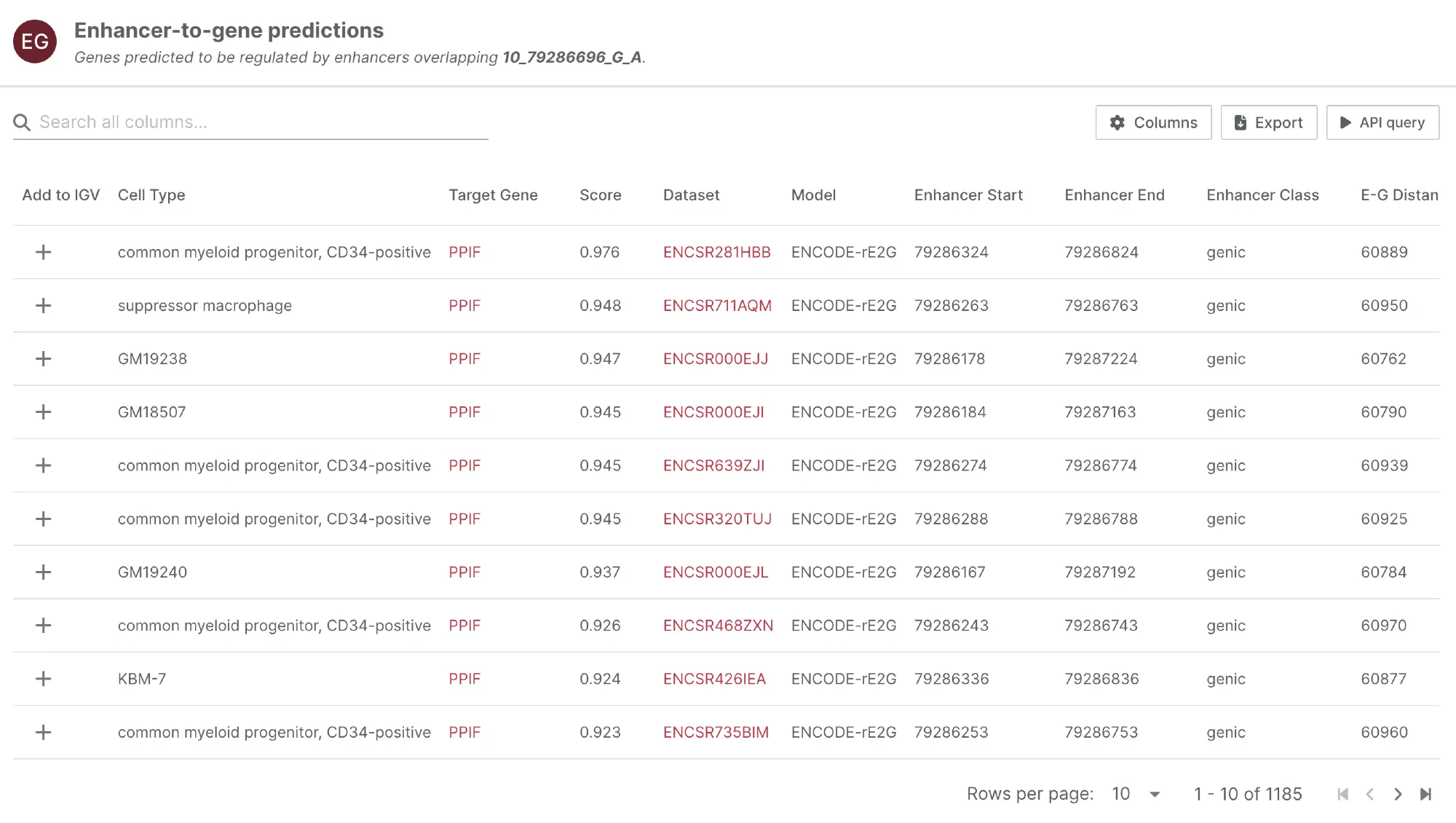
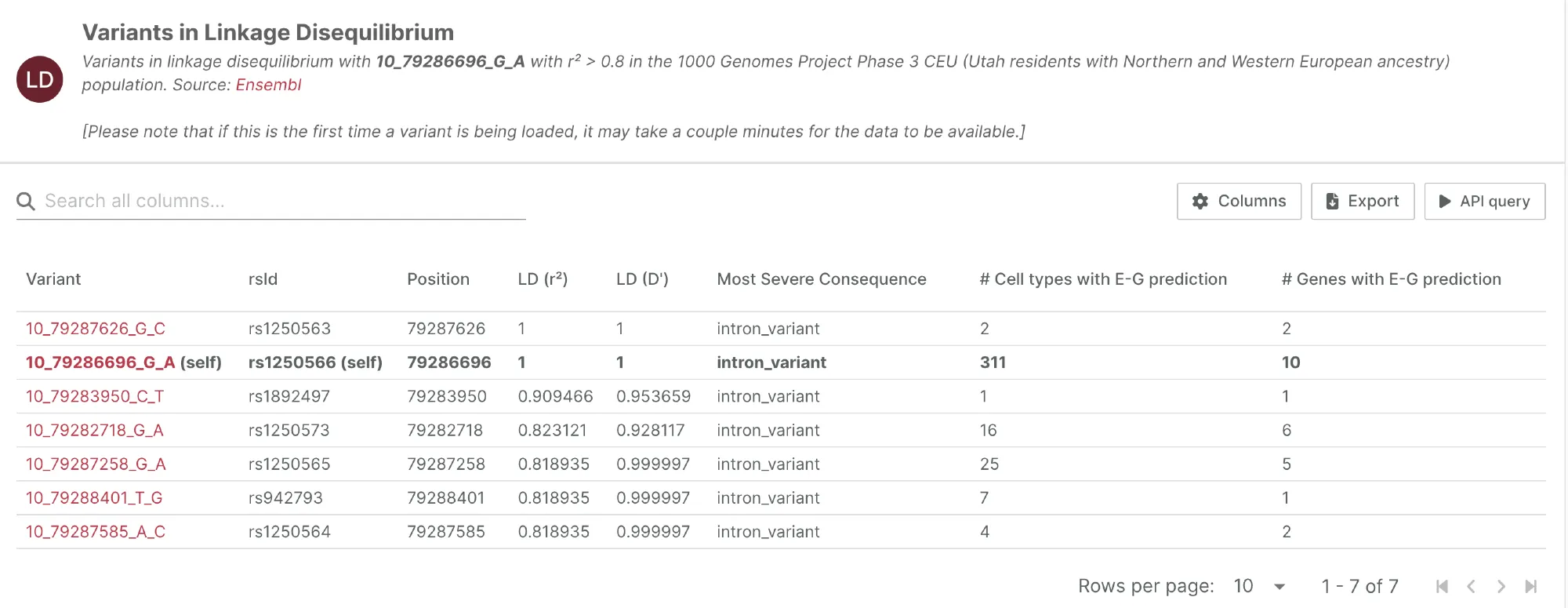
Browse predictions across cell types. An IGV-based genome browser (thanks to the IGV team) lets you scan E2G predictions cell type by cell type at e2g.stanford.edu/igv.
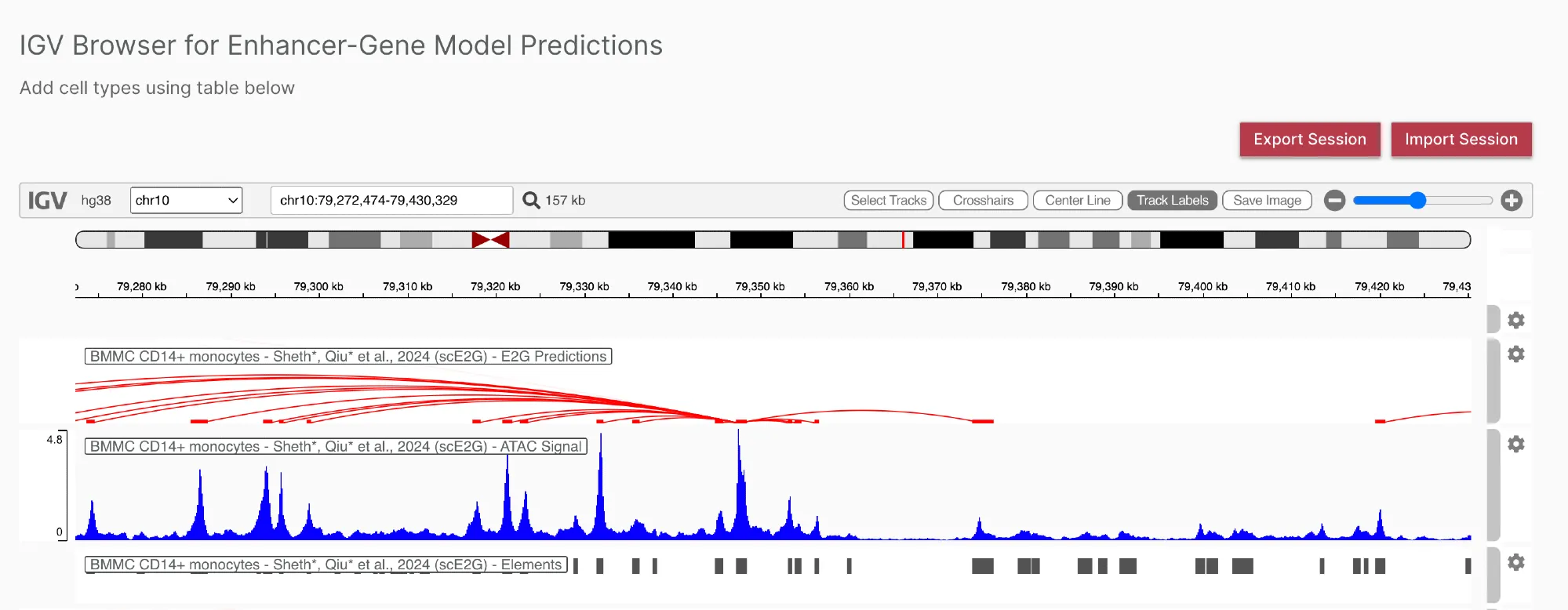
The portal extends code from the Open Targets Platform — a resource we use every day, so huge thanks to that team. A subset of the ENCODE-rE2G predictions are now available through Open Targets as well.
The E2G portal was designed and built by the heroic Riya Sinha, with Anshul Kundaje and Angel Ochoa. The underlying E2G predictions come from Maya Sheth, Andreas Gschwind, Rosa Ma, Wei-Lin Qiu, and many other collaborators — with more to come. This work was supported by the IGVF Consortium, the Novo Nordisk Foundation, and the Applebaum Foundation.
We’d love your feedback.
Explore the E2G Portal · Code on GitHub · See the underlying scE2G preprint.