What cell types drive congenital heart defects?
What cell types drive congenital heart defects (CHD)? Our preprint offers some new answers, focused on two questions: which cell types contribute to CHD genetics, and how noncoding variants shape CHD risk.
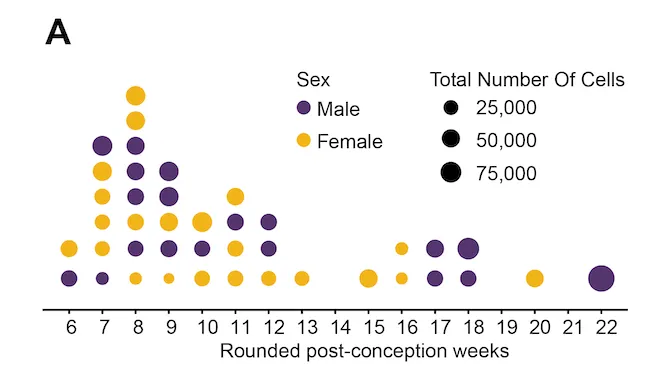
First, we collected single-cell multiomic data from 734,000 cells across 41 fetal hearts spanning post-conception weeks 6 to 22, and annotated them into more than 90 cell types and states — including rare, clinically relevant ones like cardiac conduction cells.
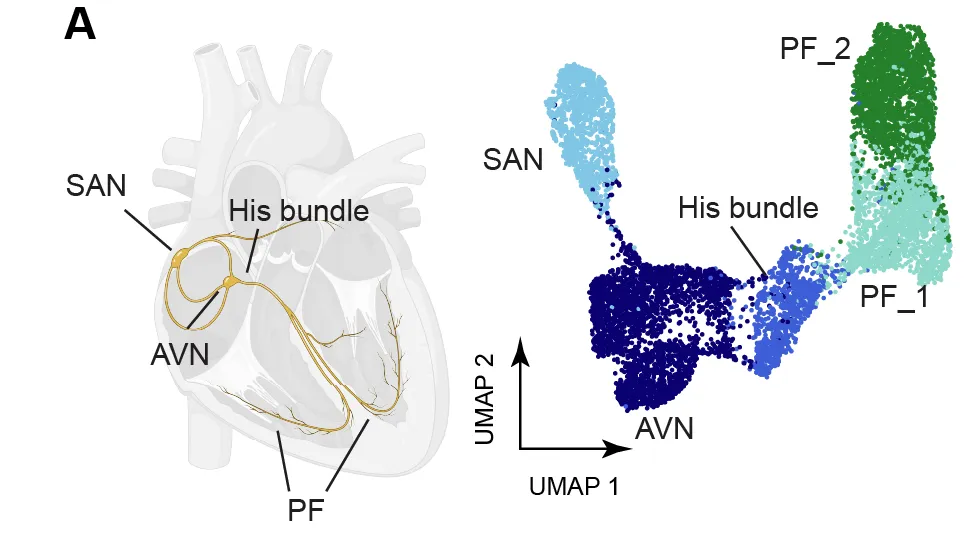
From that, we built the most comprehensive gene-regulation map of healthy heart development to date. The depth of the dataset let us apply state-of-the-art models (scE2G, BPNet) to infer relationships between variants, genes, and regulatory elements.
Applying those maps across 90 cardiac cell types to interpret coding and noncoding CHD variants, we uncovered several new principles.
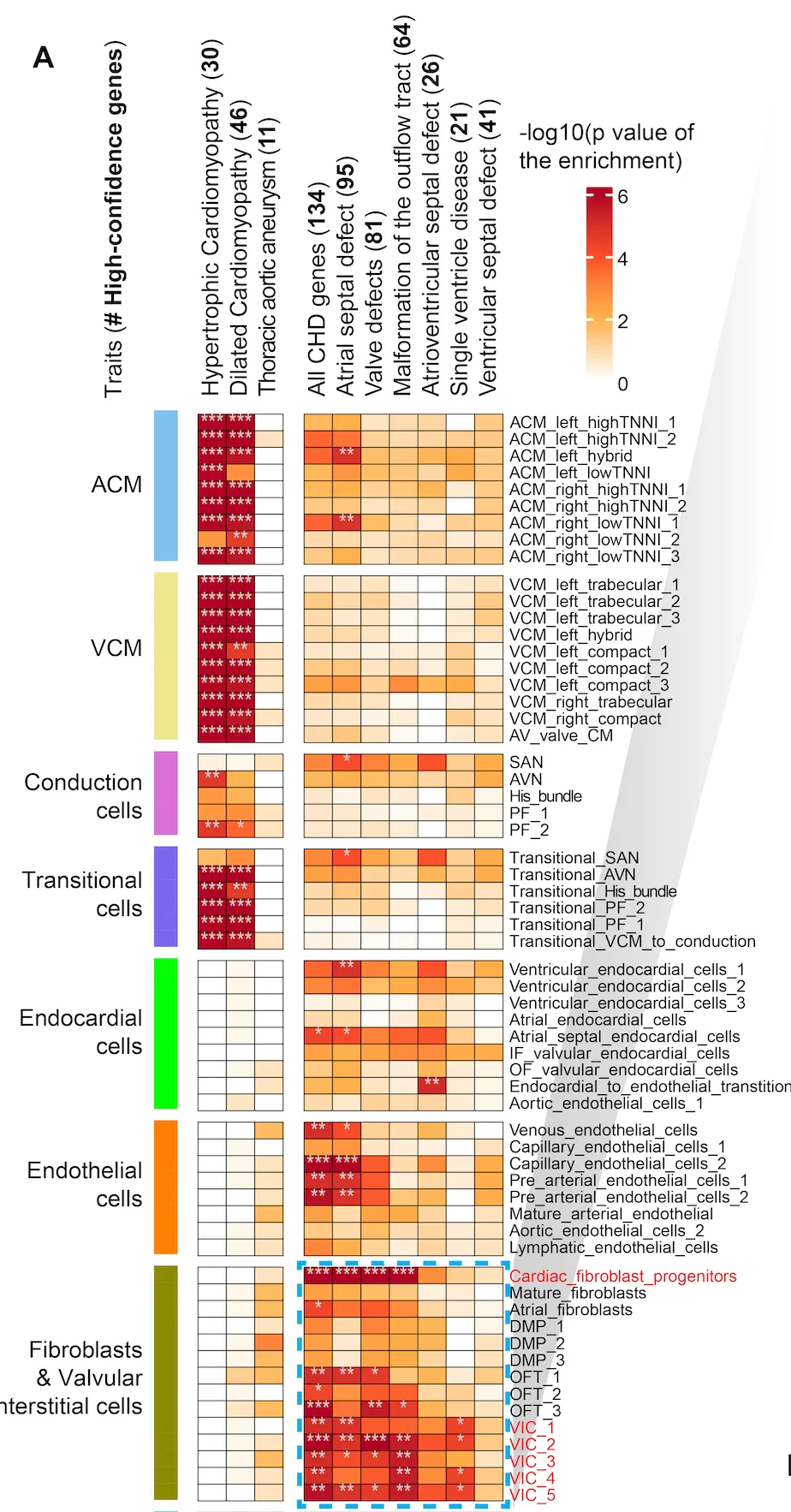
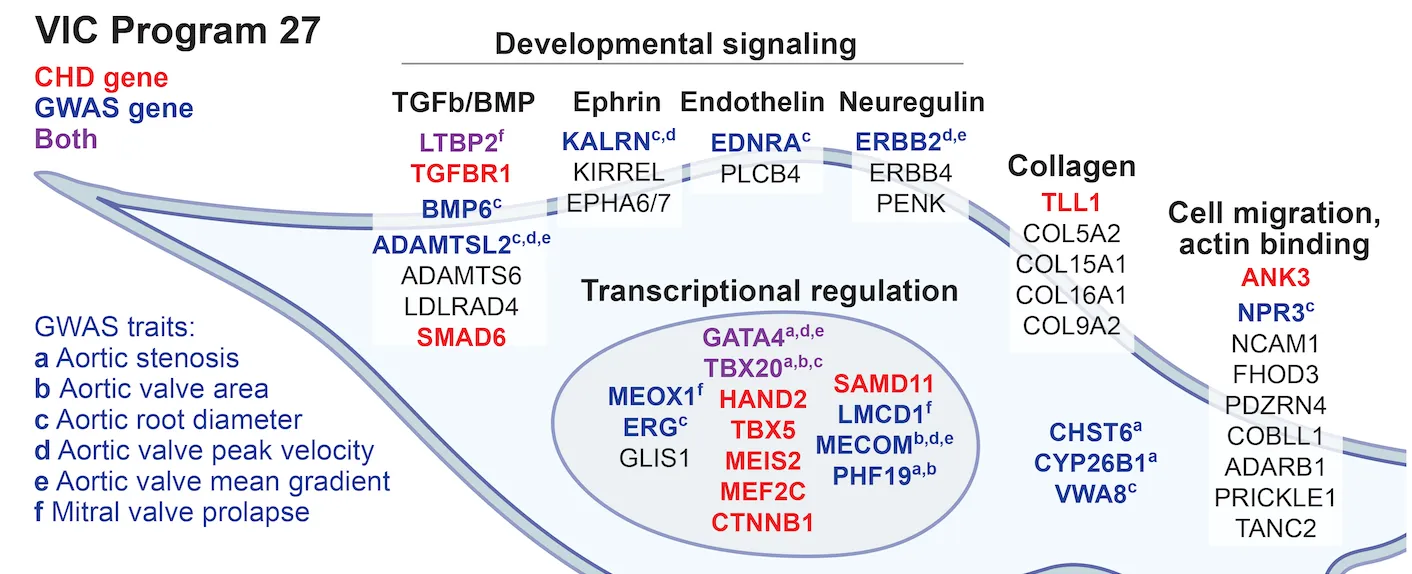
Rare coding variants point to the valves, not just the muscle. Genes carrying rare coding CHD variants were most strongly enriched — unexpectedly — in valvular interstitial cells (VICs) and cardiac fibroblasts, across multiple CHD subtypes. This suggests that heart defects may arise from beyond the working myocardium, motivating better cell and animal models for these cell types.
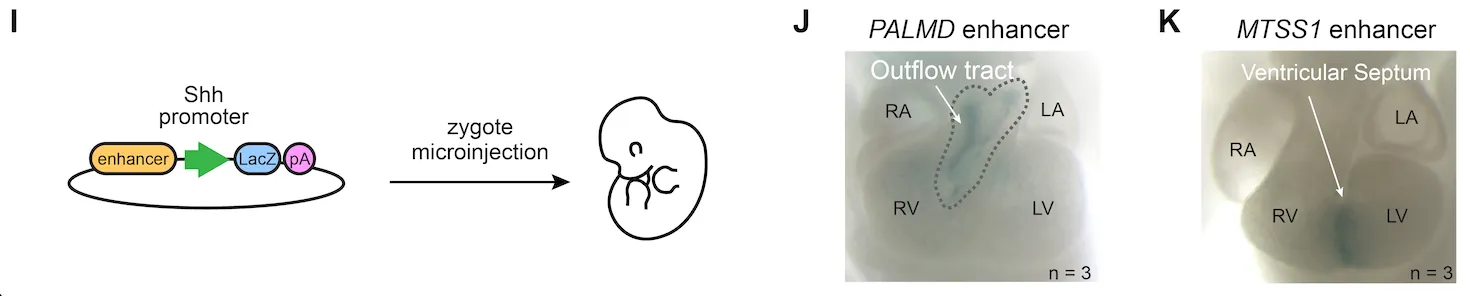
Noncoding variants act through sub-anatomically specific enhancers. Certain noncoding variants affect enhancers with activity highly specific to particular sub-anatomic structures of the heart. We linked candidate variants, target genes, and cell types to more than 700 GWAS signals across 45 cardiac diseases and traits — many overlapping enhancers accessible only in specific cell types. For example, we found enhancers with spatially specific activity in the outflow tract or the interventricular septum, illustrating how a noncoding variant can affect one specific aspect of heart structure.
Common and rare variants converge. Both rare CHD variants and common variants for quantitative valve traits and acquired valve disease converged on similar genes and pathways in VICs — hinting at a polygenic contribution to CHD. We illustrate a regulatory pathway linking common and rare variants in valve development, offering a model in which common variation tunes the severity or form of CHD, potentially explaining the varying severities seen in patients.
Read the preprint on medRxiv.