The hidden catch in CRISPR-Cas13d screens for functional circular RNAs
How can we identify circular RNAs (circRNAs) that might be functional? Together with Jesse Engreitz, Howard Chang, and the team, we found that answering this question is much harder than previously thought.
circRNAs are alternatively spliced isoforms of genes that usually make linear mRNAs. They contain the same sequence as their linear counterparts, but are back-spliced into closed loops — marked by a unique sequence called the back-splice junction (BSJ).
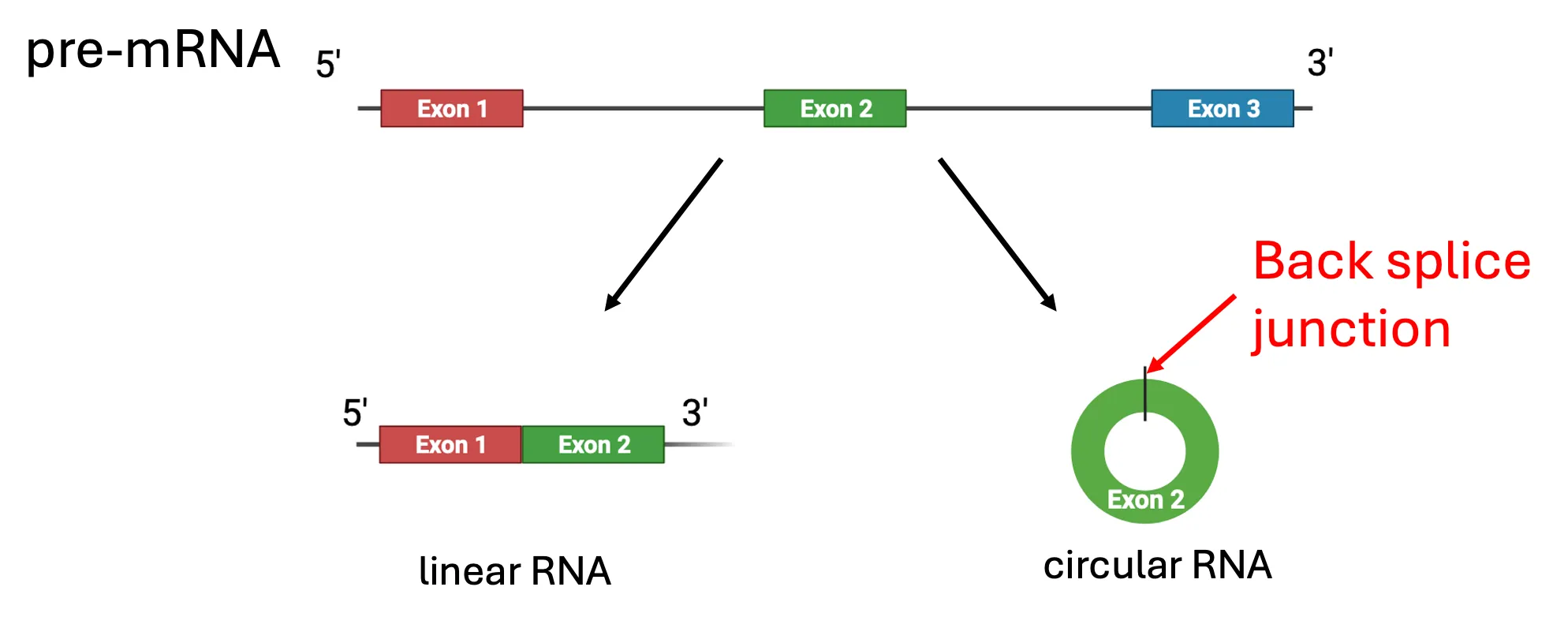
Hundreds of thousands of circRNAs have been catalogued, yet how many are actually functional is unclear — largely because circRNAs are hard to perturb independently of their linear isoforms. Targeting designs are usually restricted to a narrow window around the BSJ.
That constraint is a problem for tools like RNAi, whose well-documented off-target effects need design flexibility to avoid. CRISPR-Cas13d recently drew interest for reportedly higher efficiency and specificity in circRNA screens. Some studies looked promising — describing a reliable way to specifically degrade circRNAs at scale, and suggesting that an appreciable fraction of them are functional.
Eager to adopt the method, we ran growth screens in the well-studied K562 cell line, using Cas13d to target 900 of the most highly expressed circRNAs along with their matched linear isoforms.
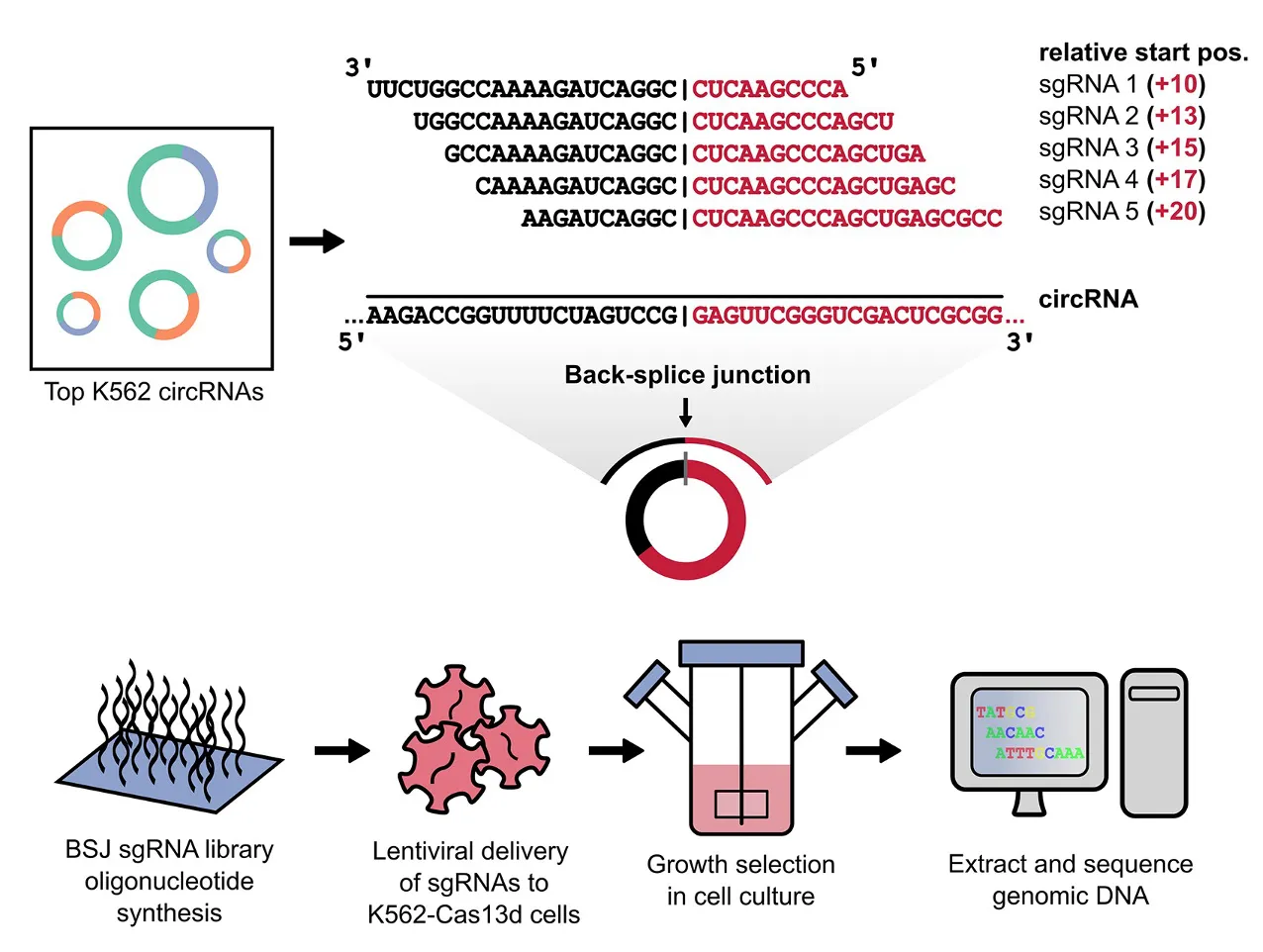
Most circRNA-targeting guides had no effect on growth — especially compared with targeting linear mRNAs. And among the guides that did seem to alter growth, we noticed a concerning pattern: nearly all of them started at the same position along the BSJ.
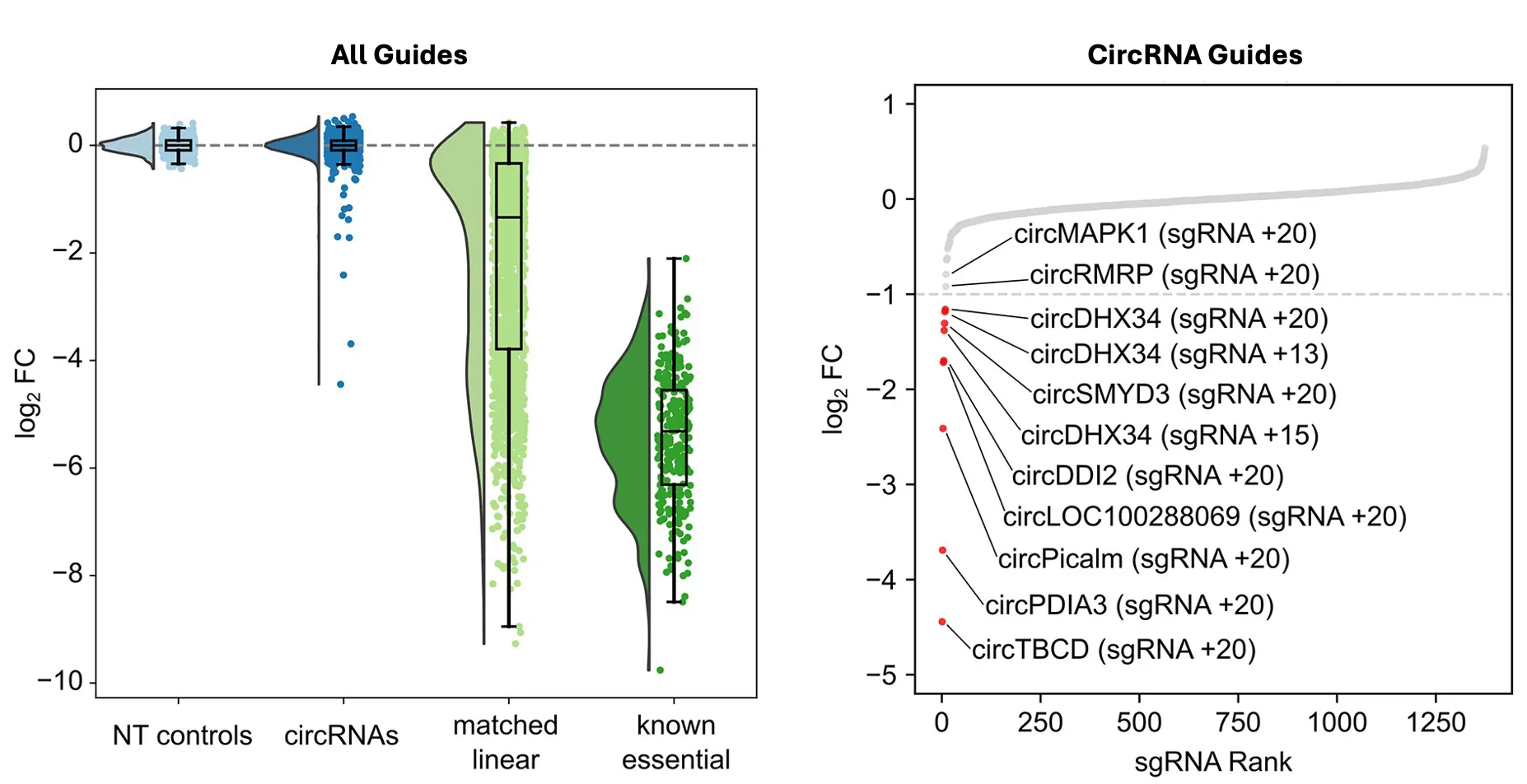
That hinted the guides might also be hitting the linear isoforms. Through single-guide RT-qPCR experiments, we confirmed that the growth effects came from unintended knockdown of the cognate linear isoforms — not the circRNAs. The problematic position gives the longest homology between the guide and the off-target linear junction; even with a 30-nucleotide spacer, only 22–23 nucleotides of homology are needed to activate Cas13.
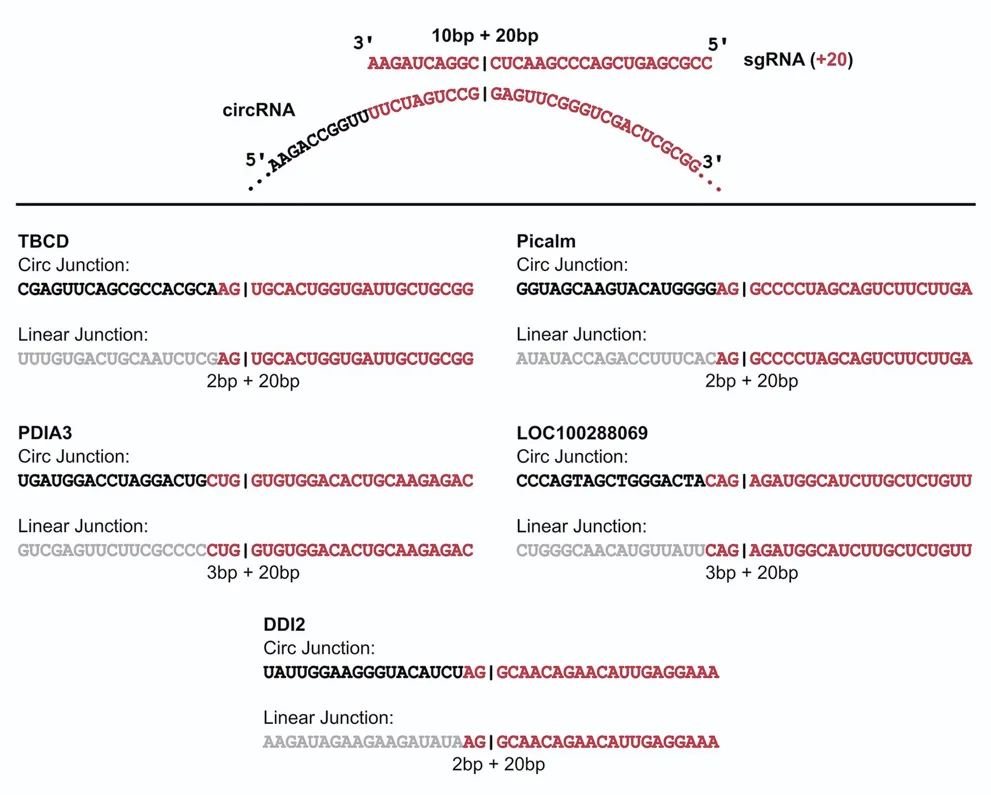
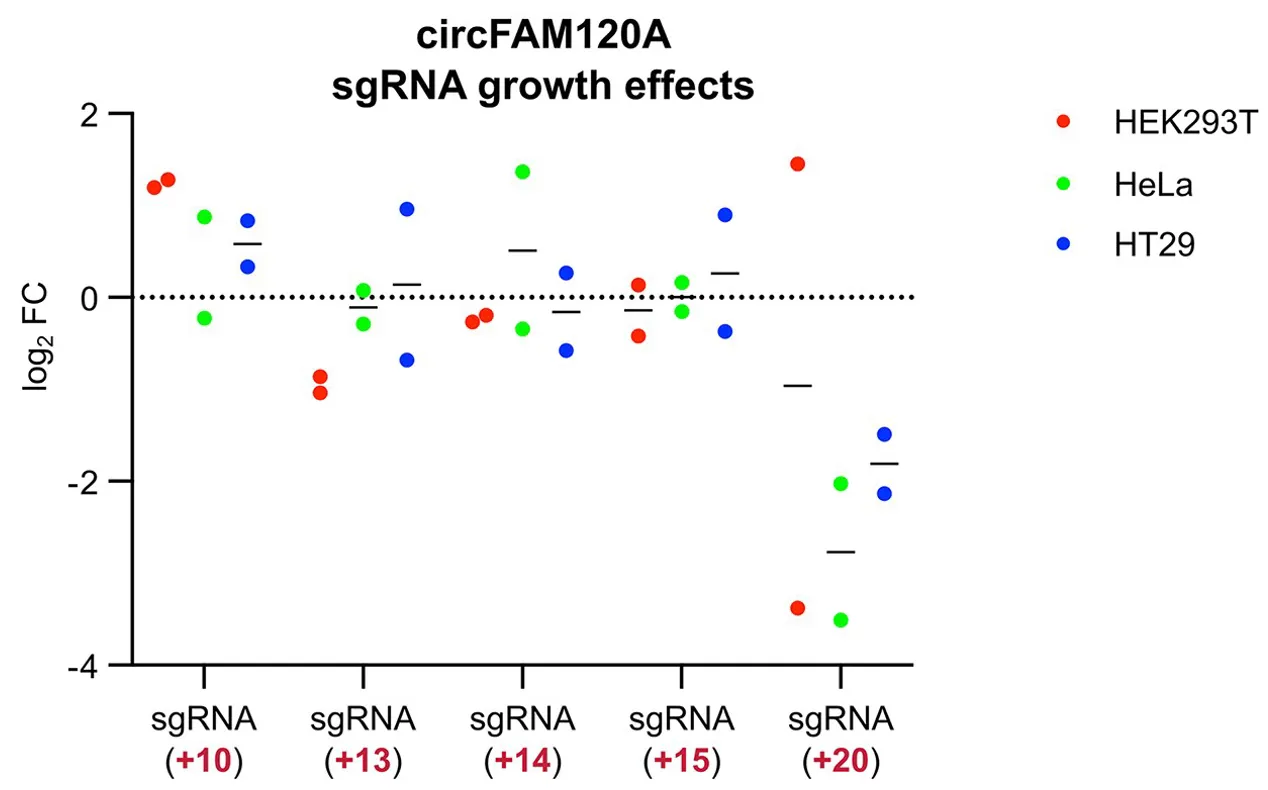
Given the similar guide designs, we asked whether published screens suffered the same issue. Re-analyzing their data and running our own RT-qPCR, we confirmed that many of their top hits were likely confounded by off-target effects.
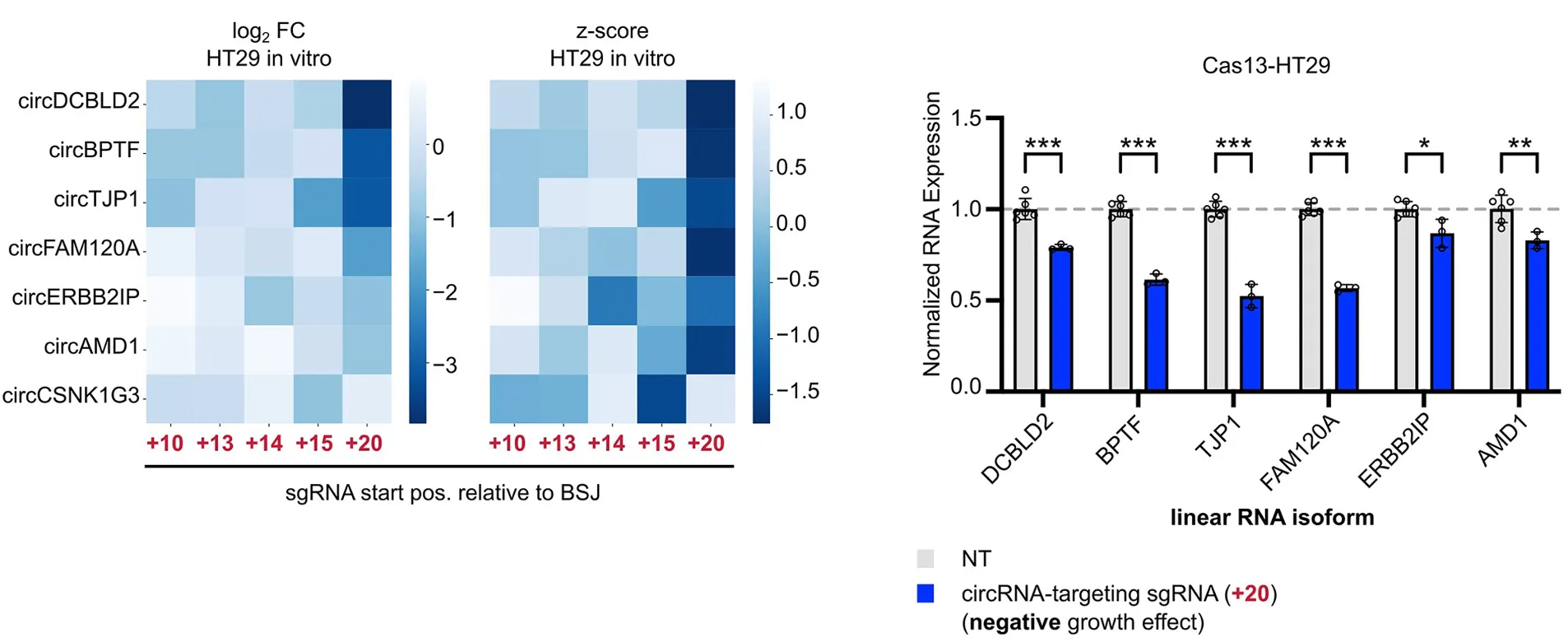
That included circFAM120a — the main circRNA hit the original authors had selected for further characterization.
Read the paper in Nucleic Acids Research.