Can a formula this simple predict which enhancers regulate which genes?
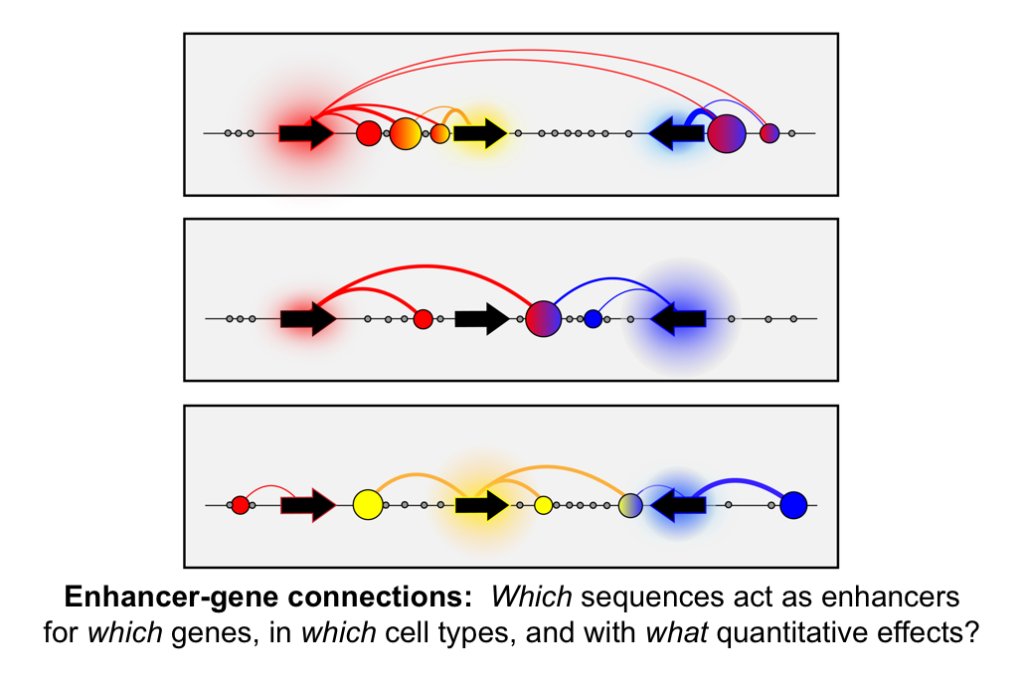
How can we predict which enhancers regulate which genes, in which cell types?
Enhancers tune gene expression in each cell type in the body, and we know they can control multiple genes over long distances with cell-type specific effects. But are there simple rules that explain this network of millions of enhancers × 21,000 genes × thousands of cell types?
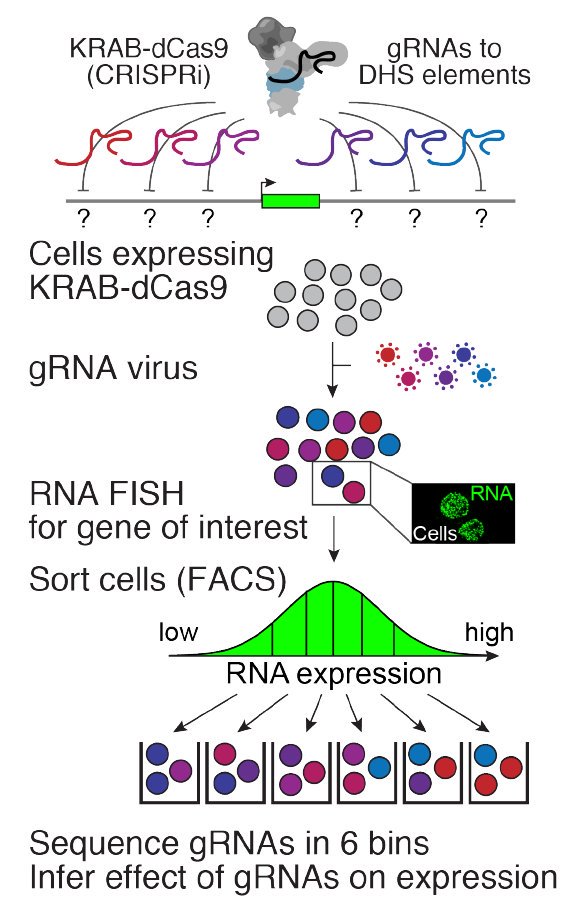
To answer it, we first mapped many thousands of potential enhancer–gene connections experimentally, using a new method combining CRISPR interference with RNA FISH and flow cytometry — CRISPRi-FlowFISH.
With gold-standard CRISPR data in hand, we checked whether any existing model could predict enhancer–gene regulation. The answer was no. Hi-C loops, contact domains, nearest gene, DHS enhancer–promoter correlation, and others all performed poorly.
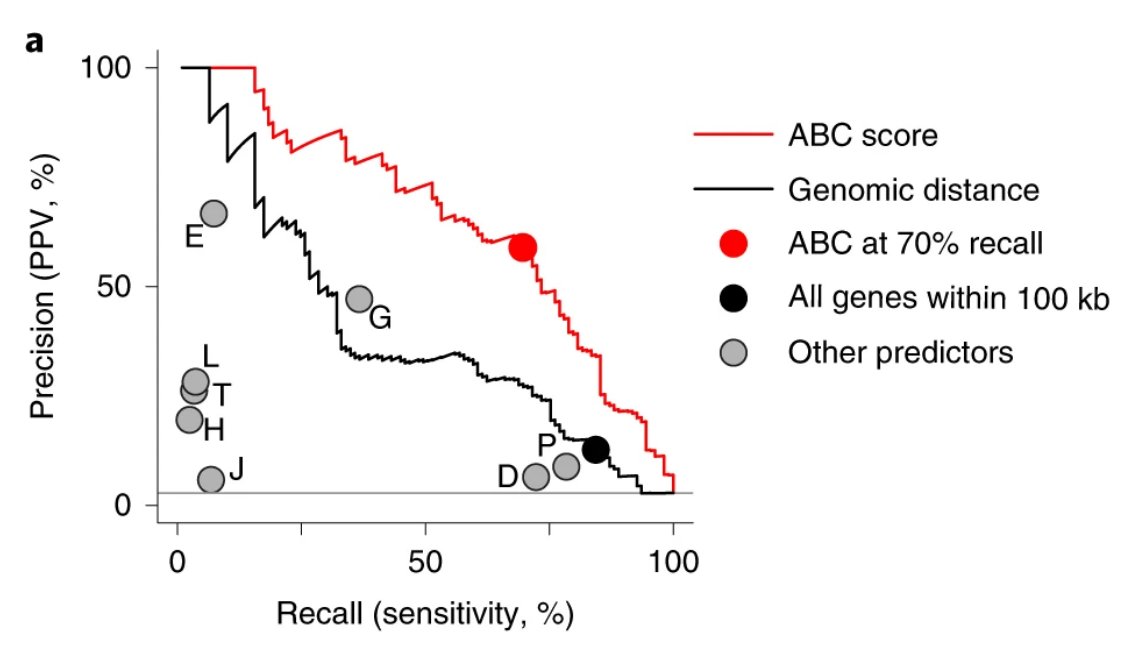
So we explored other prediction methods. Our best model was surprisingly simple:
Effect of enhancer = Activity (count ATAC + H3K27ac reads) × Contact (count Hi-C reads)
This encodes the notion that enhancers act on promoters upon 3D contact, with different strengths.
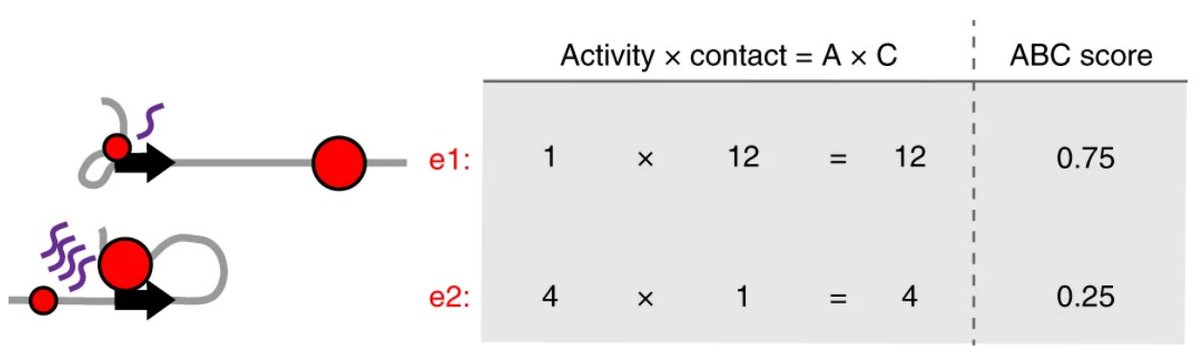
This Activity-by-Contact (ABC) model works remarkably well at predicting our CRISPR data — in K562 cells and in other cell types.
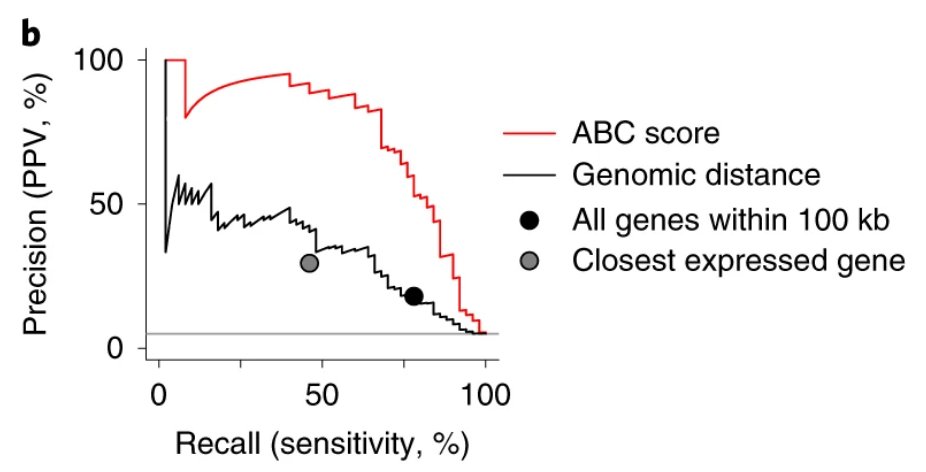
So now we have a simple way to predict enhancer–gene connections, for any gene in any cell type. At minimum, computing ABC requires ATAC-seq and H3K27ac ChIP-seq.
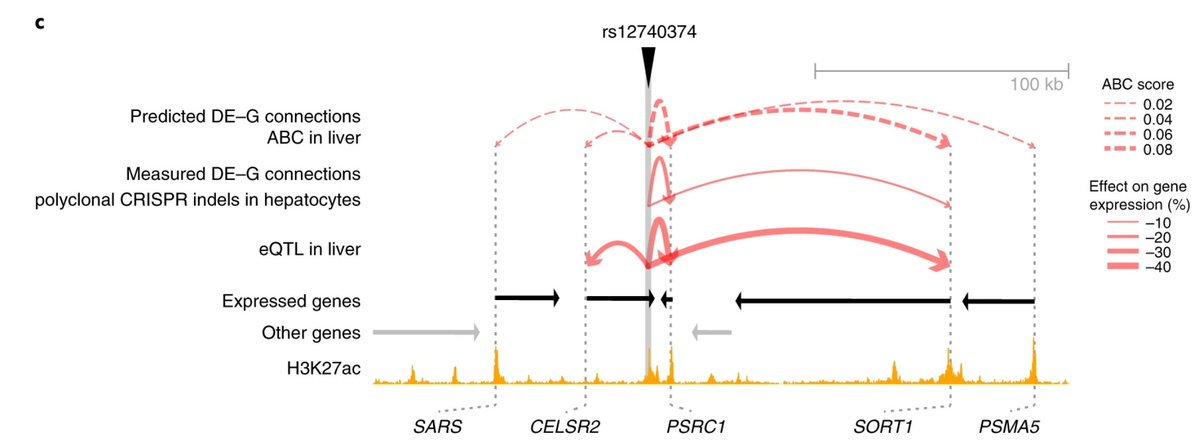
ABC maps can also help connect common disease variants to their target genes. At the SORT1 locus, ABC maps in hepatocytes connect to SORT1, matching eQTL and CRISPR data — though note that the variant regulates multiple genes.
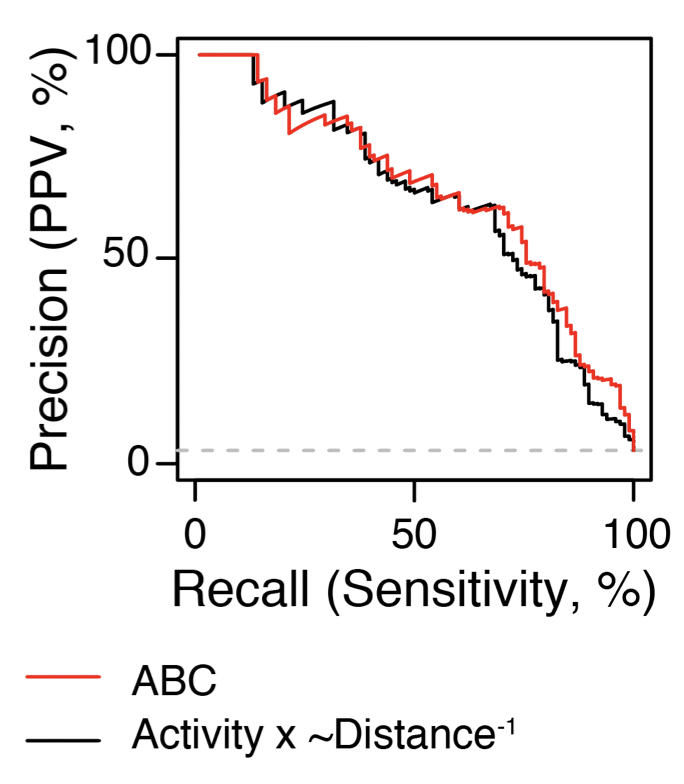
And there is an implication for understanding the 3D genome. Estimating 3D contact as a function of genomic distance predicts the CRISPR data nearly as well as using Hi-C. So contact frequency from distance — rather than CTCF loops or domains — appears to be the key feature for most enhancers.
Read the paper in Nature Genetics · Code on GitHub.