What are all those peaks doing?
Have you ever looked at a gene in IGV or a genome browser and wondered, “What are all those (ATAC-seq/H3K27ac/CTCF ChIP-seq/…) peaks doing?” We developed a new technology called Swap-seq to answer that exact question.
This was a truly collaborative work between the labs of Jesse Engreitz, Lacra Bintu, Anders Hansen, and Anshul Kundaje.
Where are the regulatory elements, and how do they work?
A fundamental challenge in gene regulation is to identify all regulatory sequences that tune the expression of a given gene in any cell type. Where are these elements, and how do they work? Do we need to experimentally locate them, or can we now predict them with AlphaGenome and other AI models?
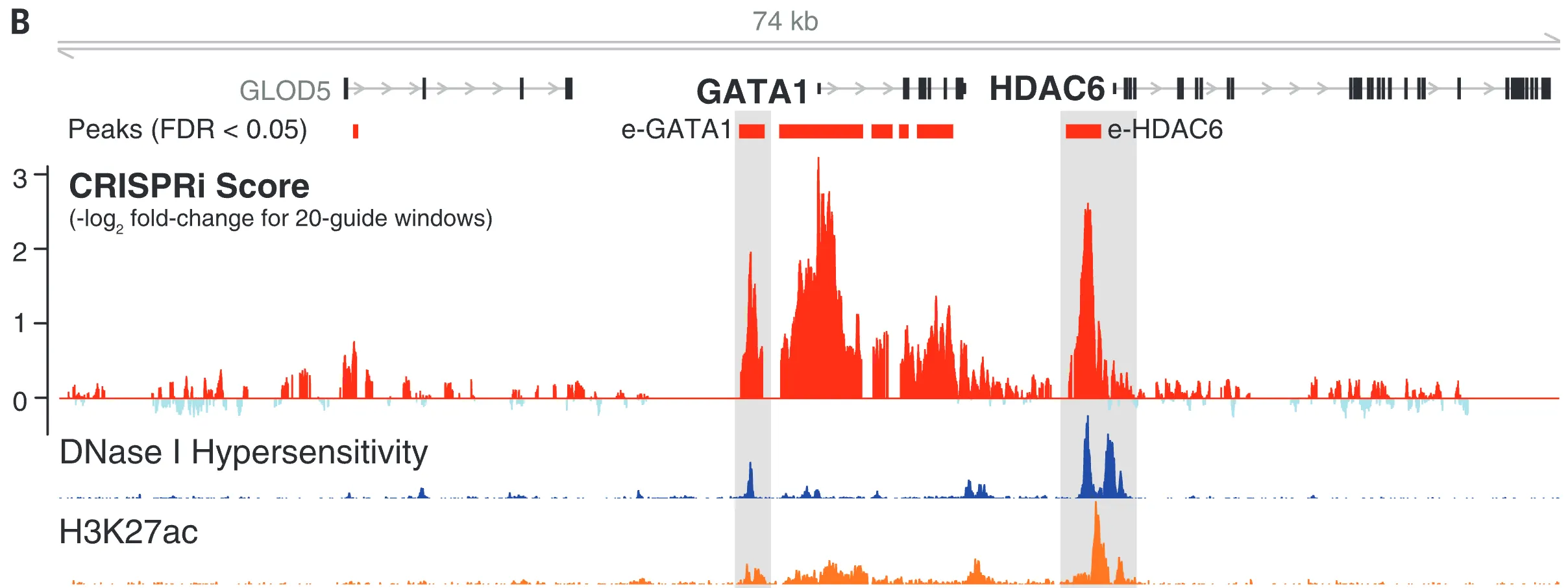
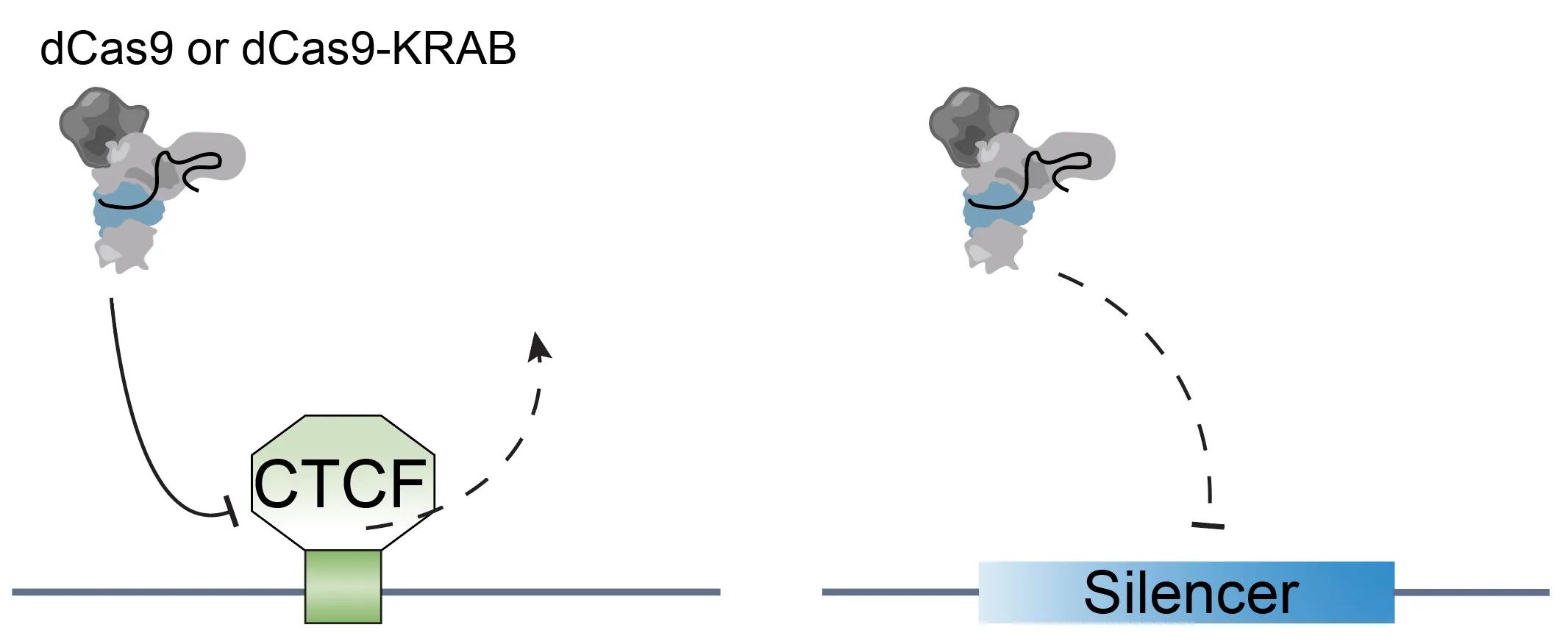
We and others have applied CRISPRi screens to characterize hundreds of thousands of regulatory elements, but CRISPRi may have blind spots. It blocks Pol II and can’t reliably test enhancers in gene bodies, and there may be classes of elements — such as CTCF sites or silencers — that cannot be inhibited by CRISPRi.
Swap-seq: tiled, barcoded deletions with twin prime editing
Swap-seq is the next generation of CRISPR technology for quantitatively characterizing hundreds of regulatory elements in one experiment. Using pooled twin prime editing, Swap-seq generates precise tiled deletions across a locus and replaces them with barcoded DNA cassettes.
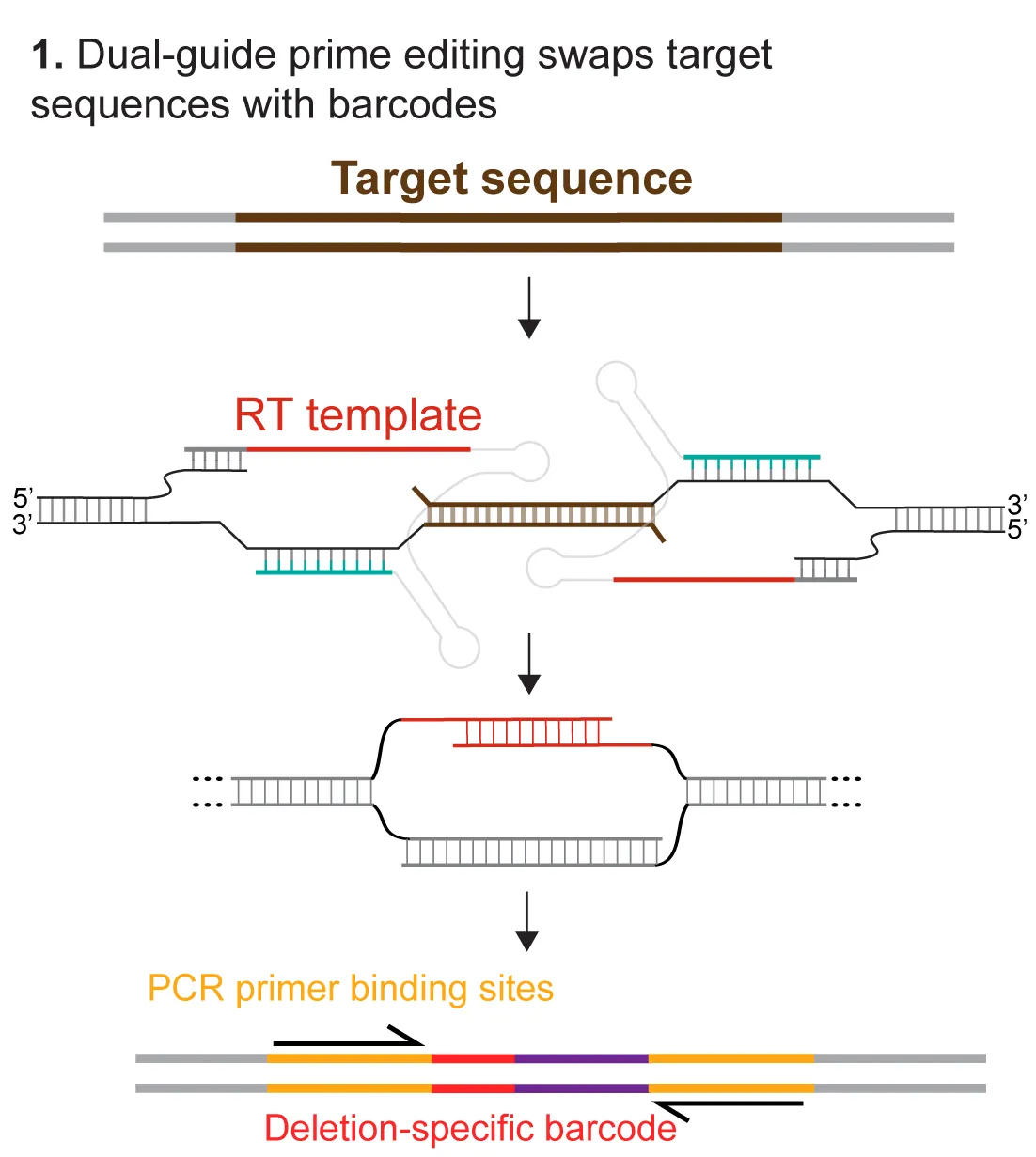
Using RNA FlowFISH, we sorted millions of cells on gene expression. By sequencing the barcode cassettes, we precisely quantify the effect of each deletion. Swap-seq at last delivers a tool to tile deletions around a gene and search for regulatory elements that we might have previously missed.
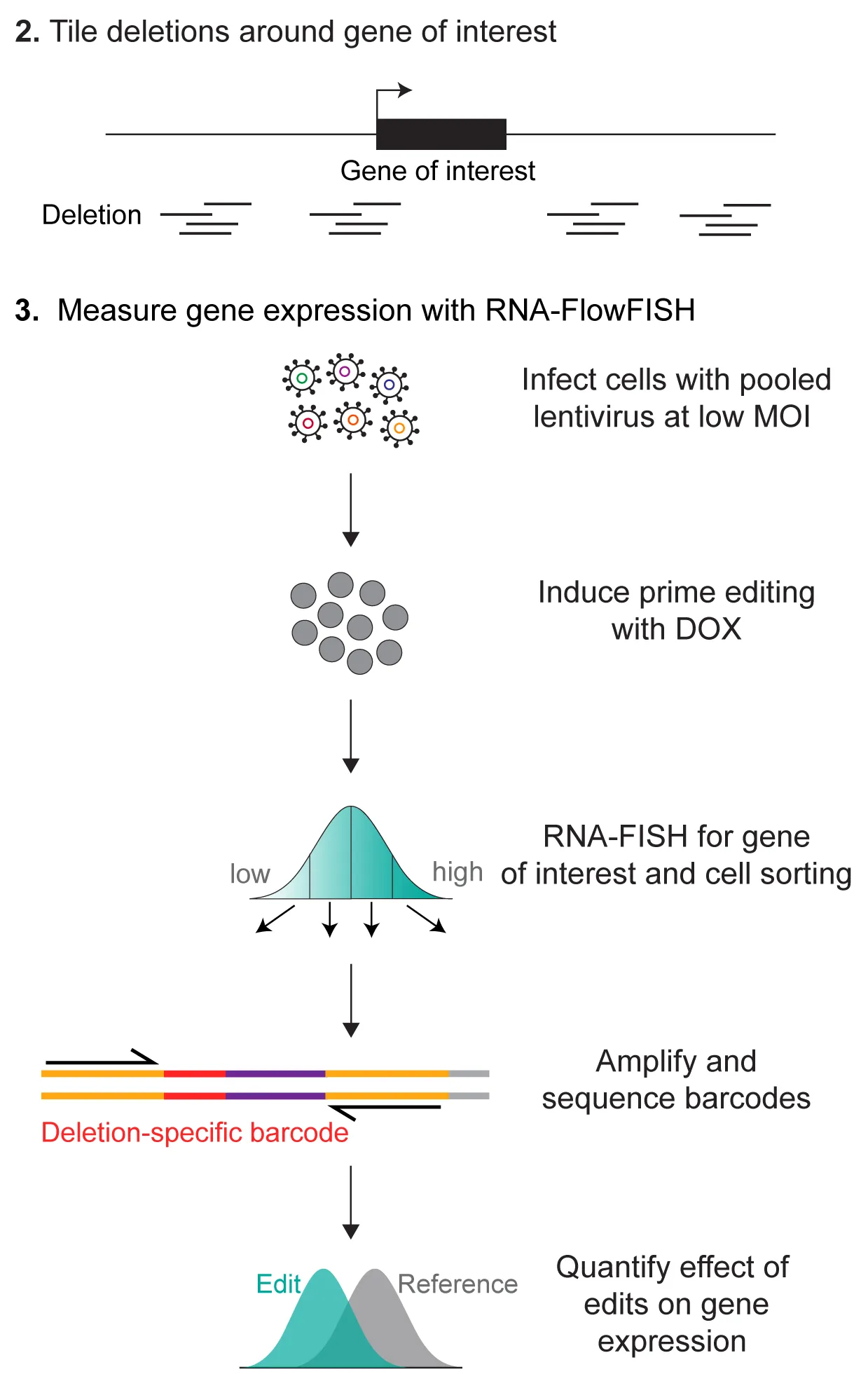
We demonstrated Swap-seq by systematically interrogating PPIF, a key mitochondrial regulator in monocytes. We generated hundreds of 50- to 250-bp deletions within 24 candidate regulatory elements and precisely measured their effects on PPIF expression.
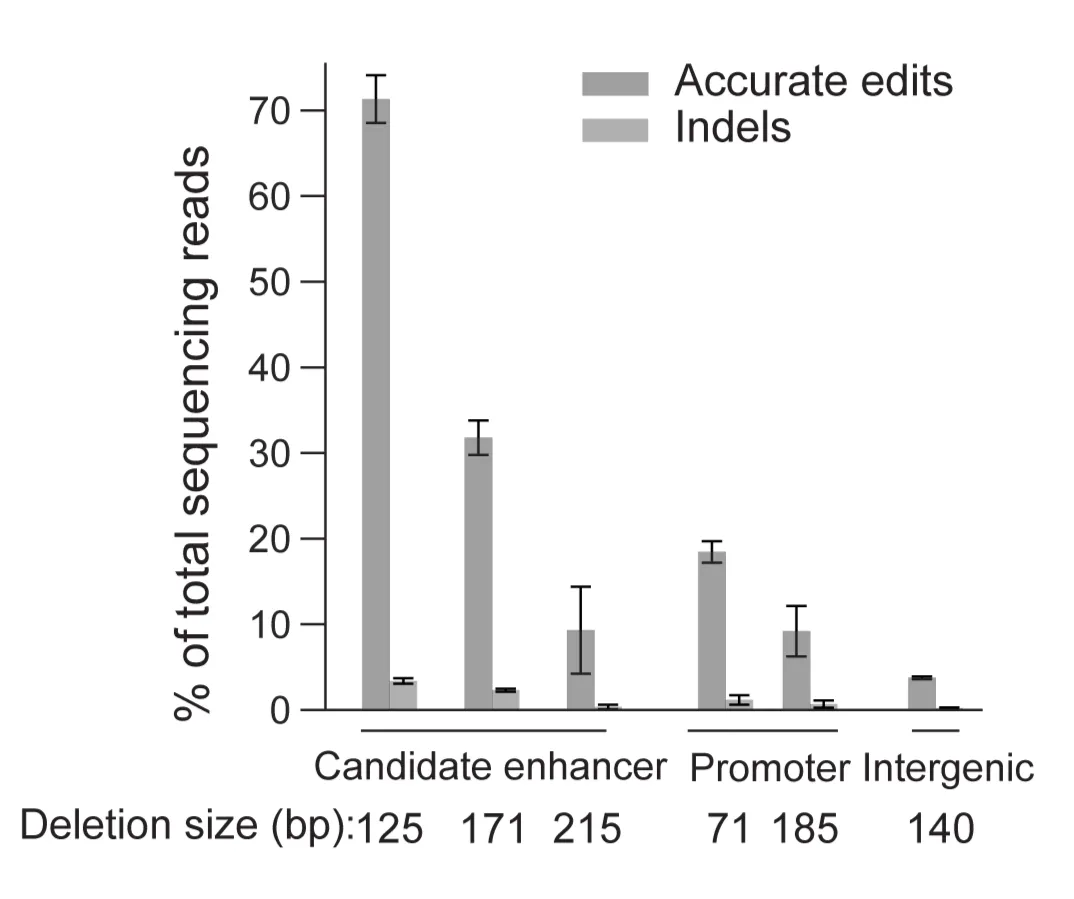
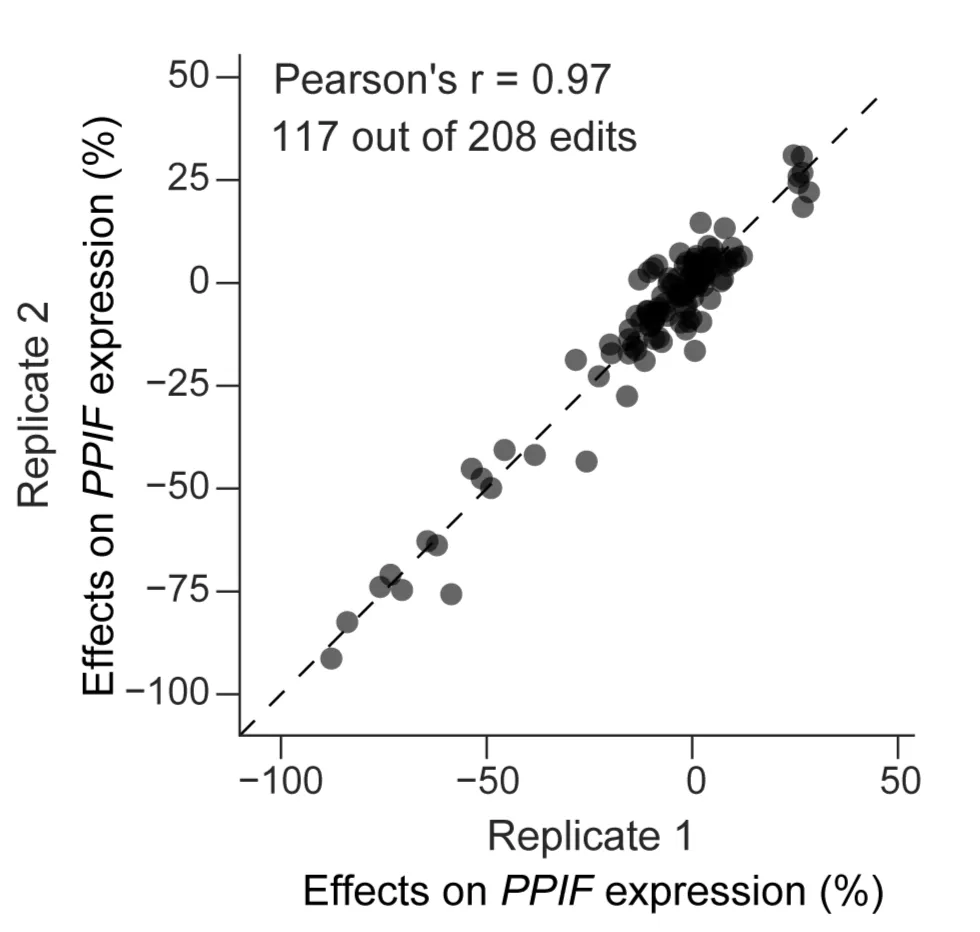
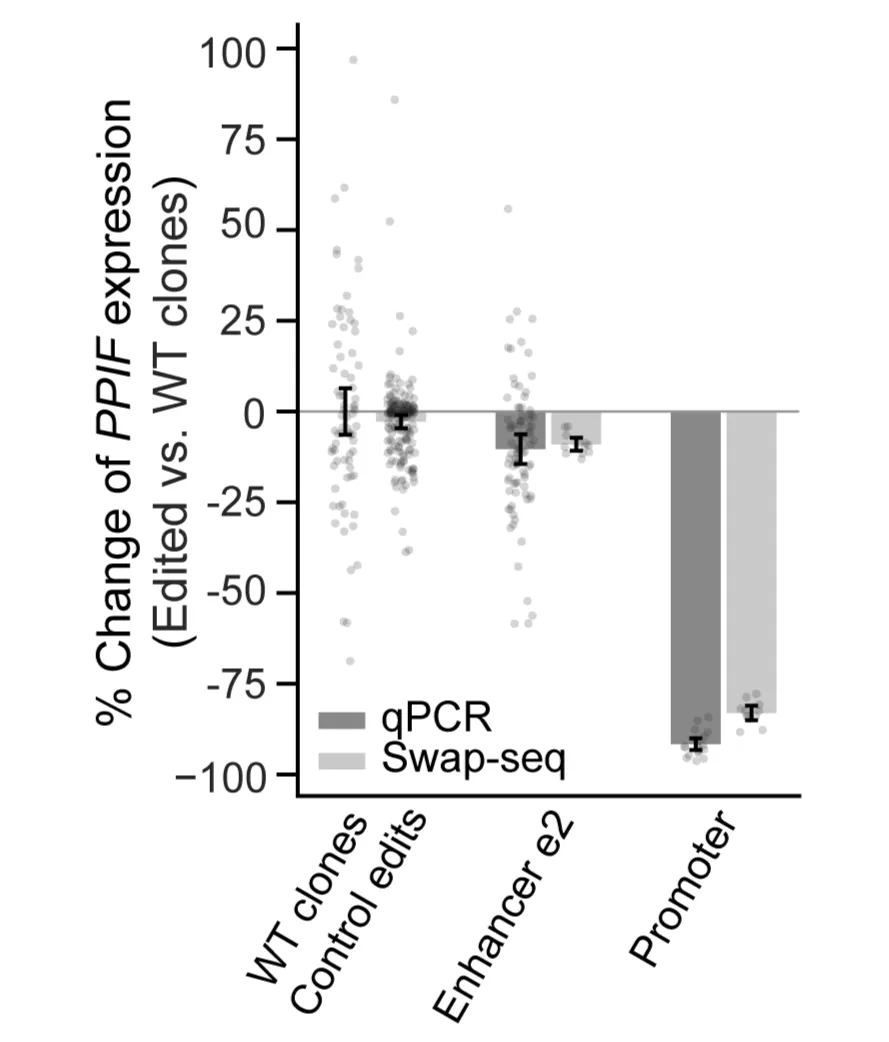
Twin prime editing generated large deletions accurately, with low rates of indels. With millions of single-cell measurements, Swap-seq effect sizes are highly reproducible between biological replicates and well calibrated against qPCR.
Enhancers and CTCF sites
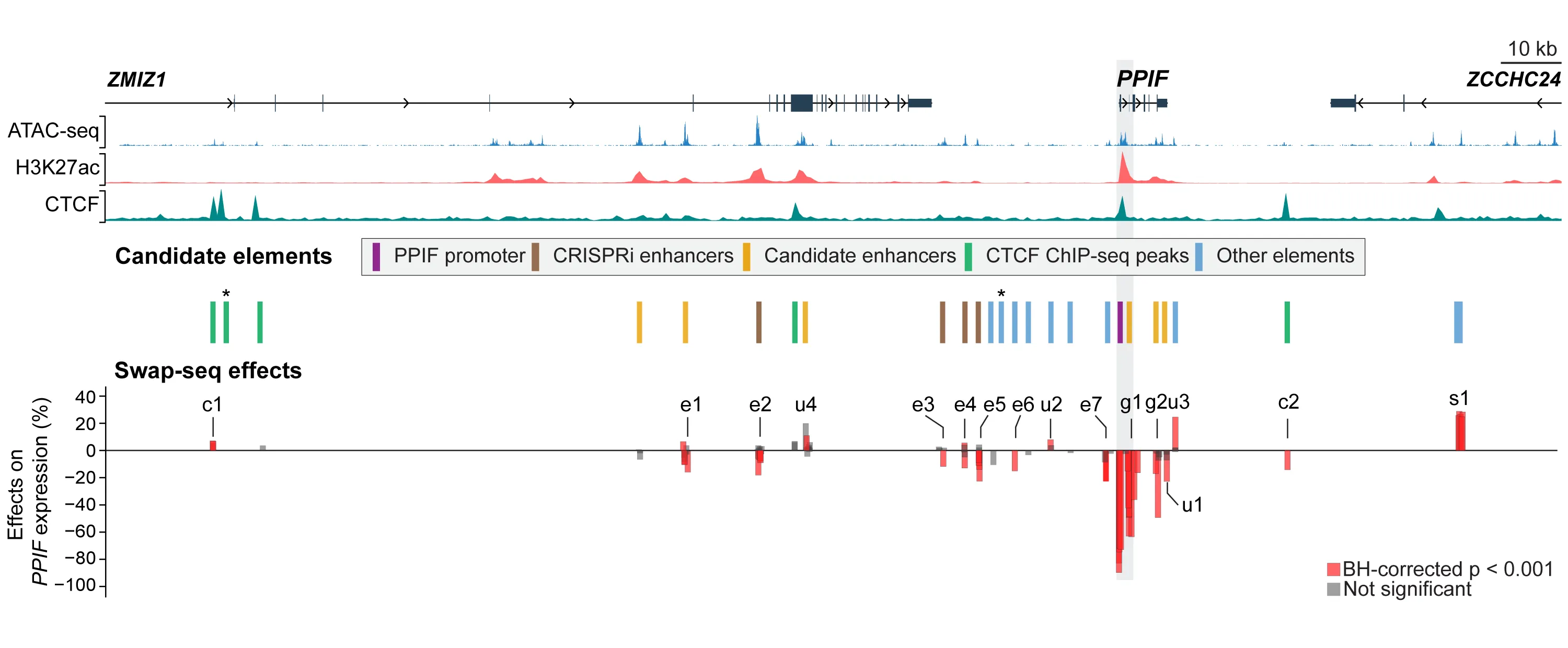
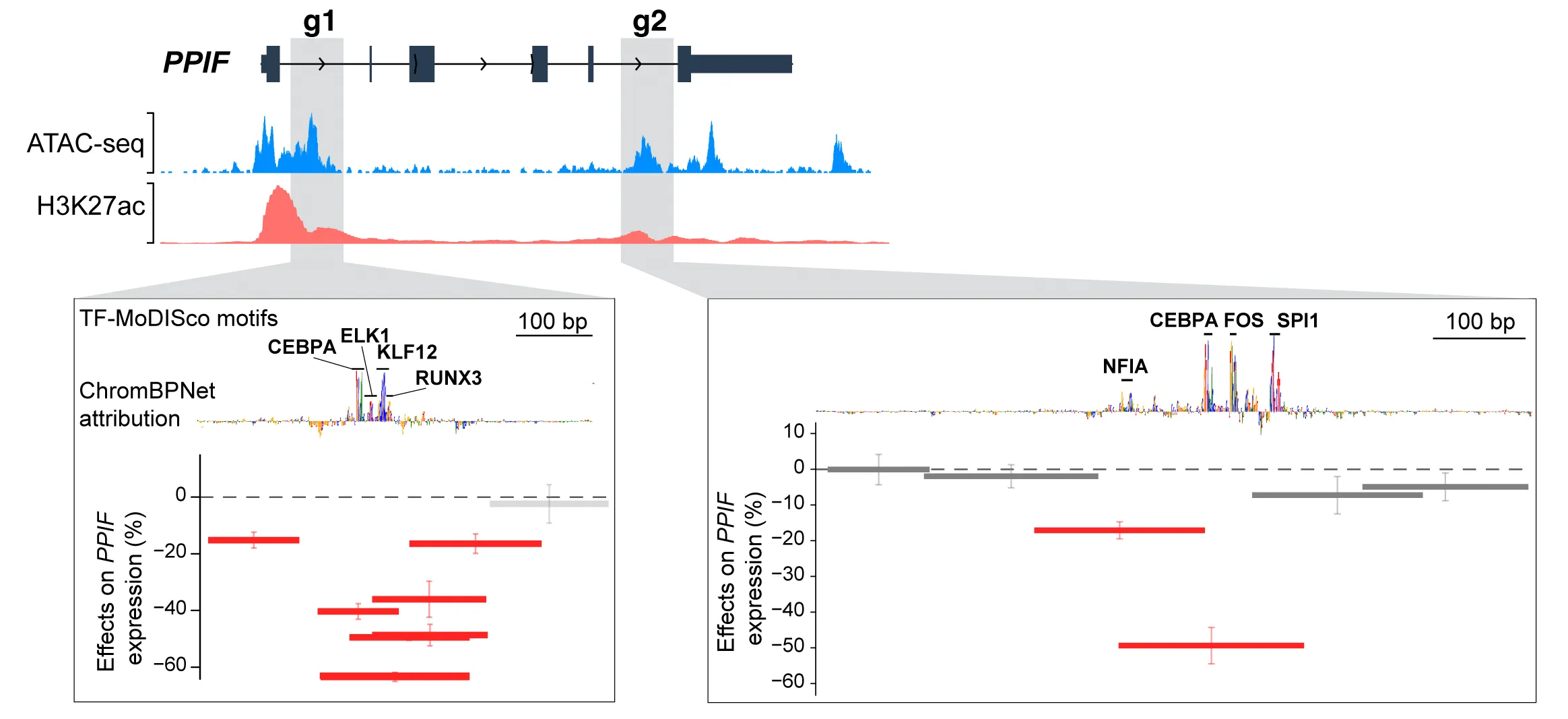
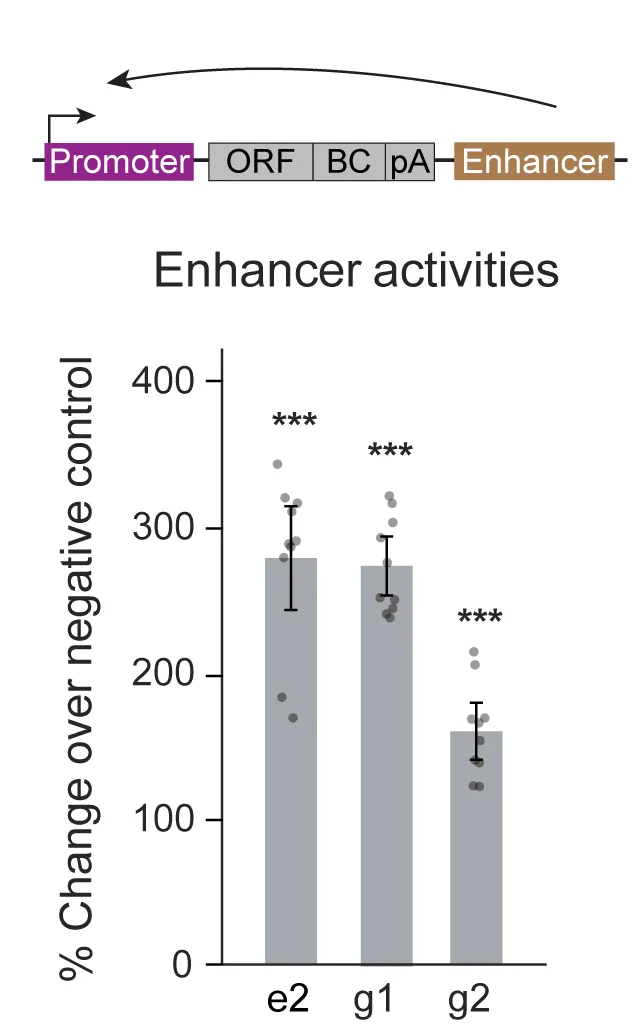
Compared with previous CRISPRi screens, Swap-seq validated distal enhancers, found new elements, and dissected their regulatory sequences — for example, we used ChromBPNet to identify transcription factor binding sites that overlap significant tiles. Here are two intronic enhancers, which we validated with lentiMPRA.
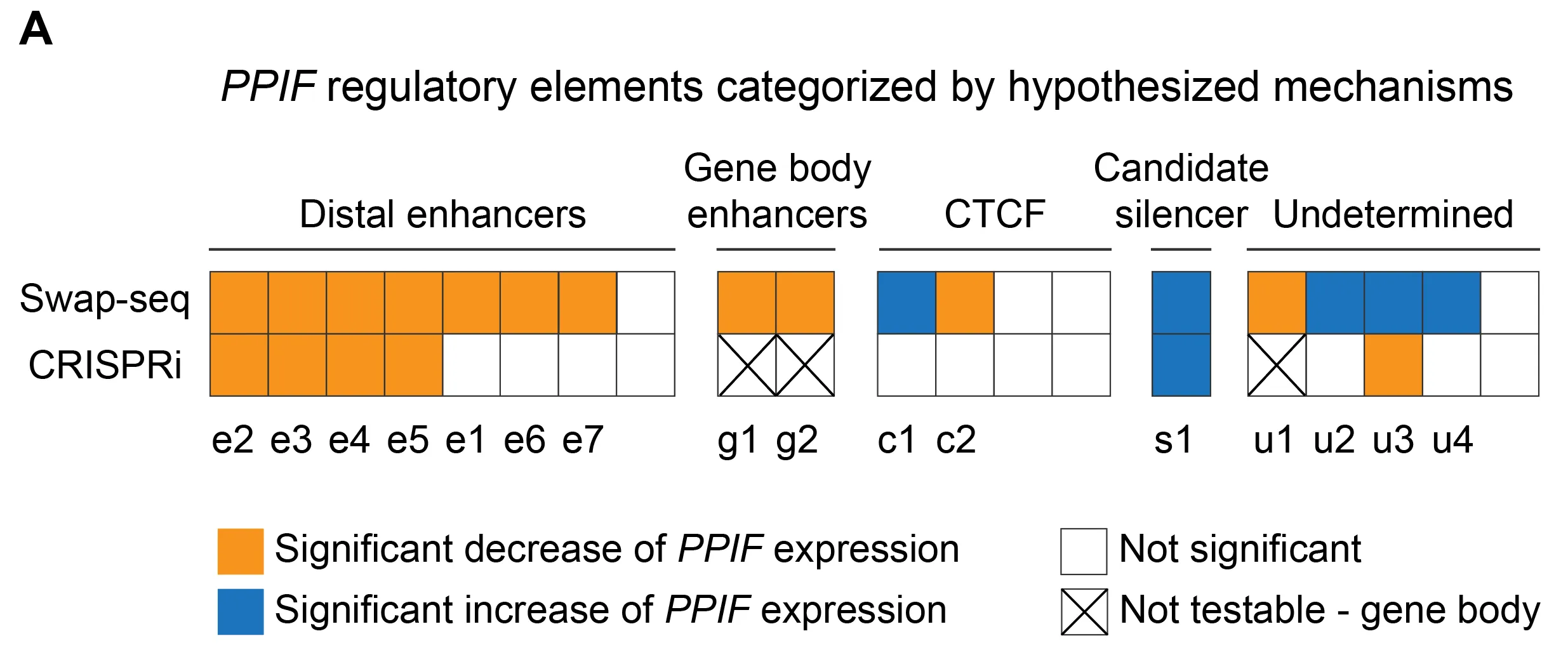
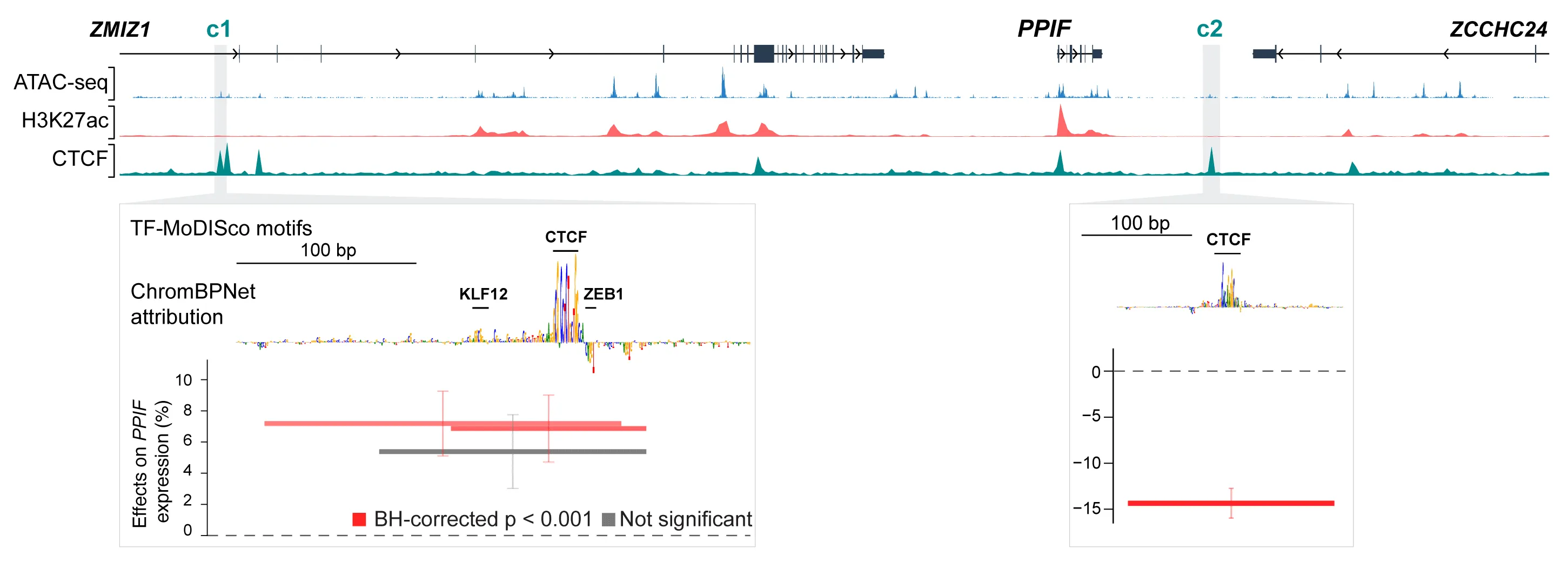
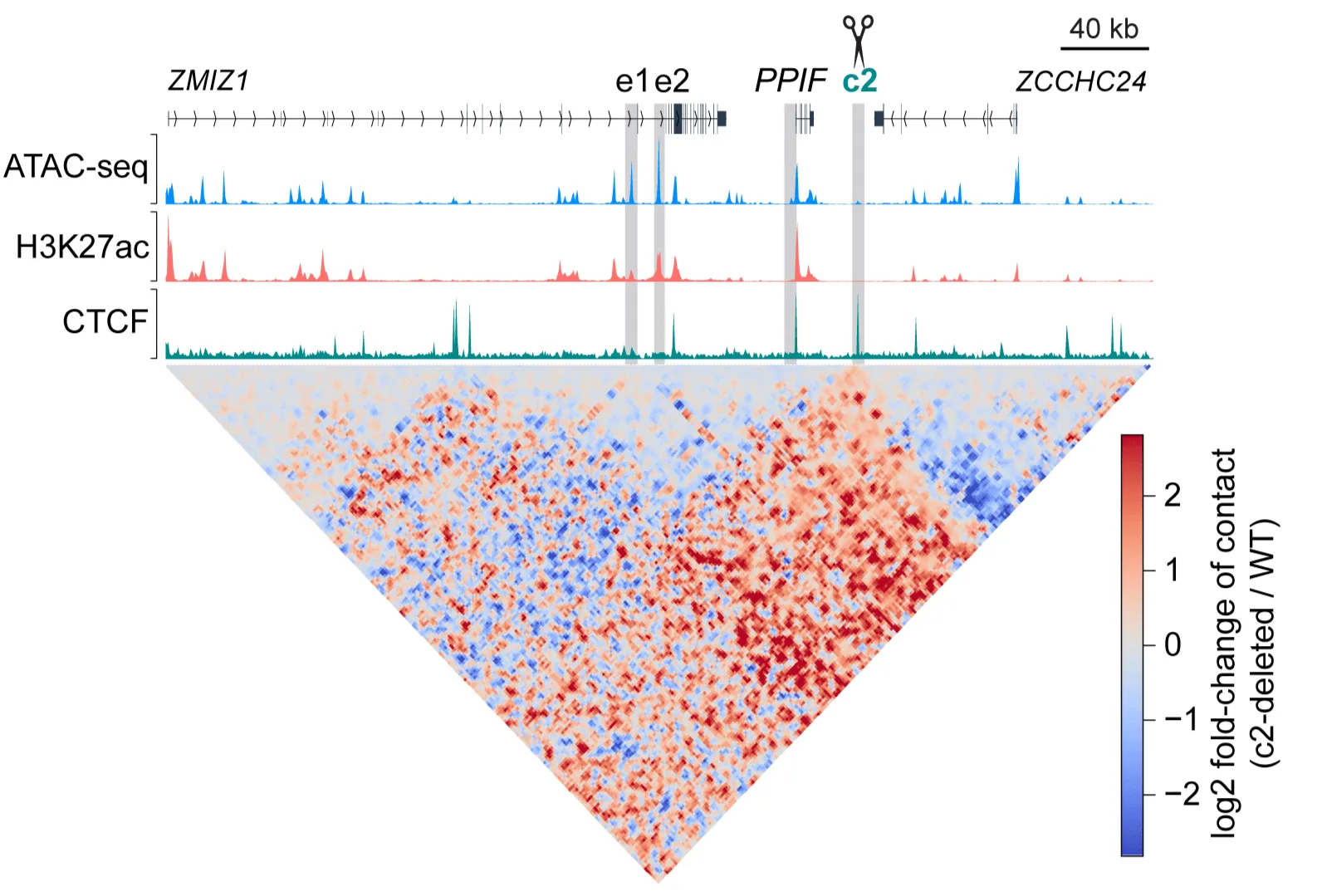
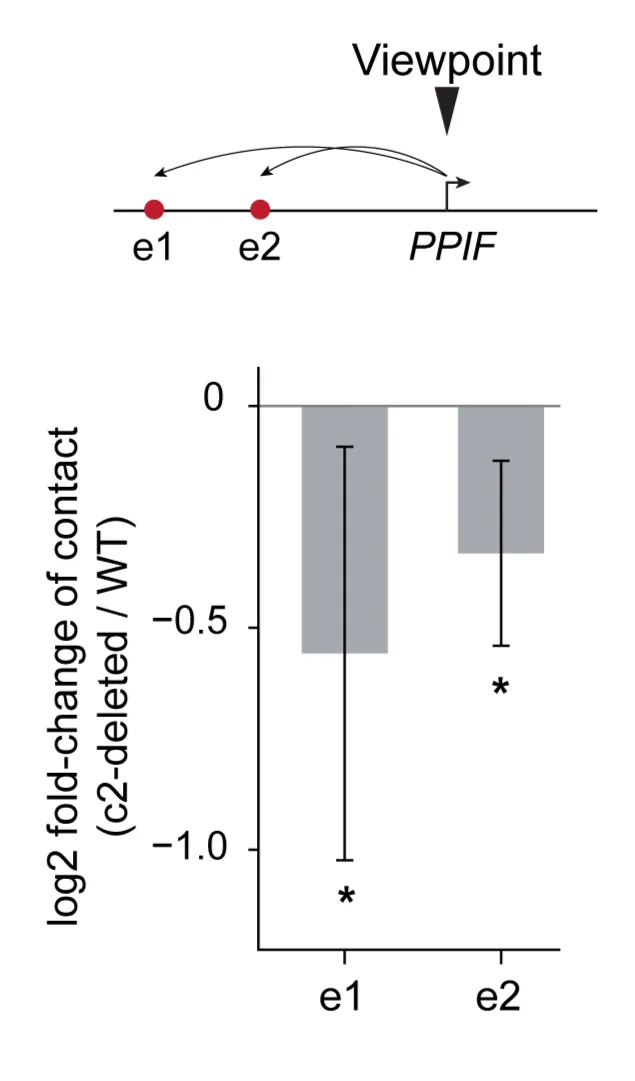
Swap-seq also quantified the effects of CTCF sites on gene expression, and found two that affected PPIF in opposite directions. In collaboration with the Hansen Lab, we used Region Capture Micro-C (RCMC) to show that CTCF deletions can rewire the 3D genome, change enhancer–promoter contact, and tune gene expression.
A distal silencer, 60 kb away
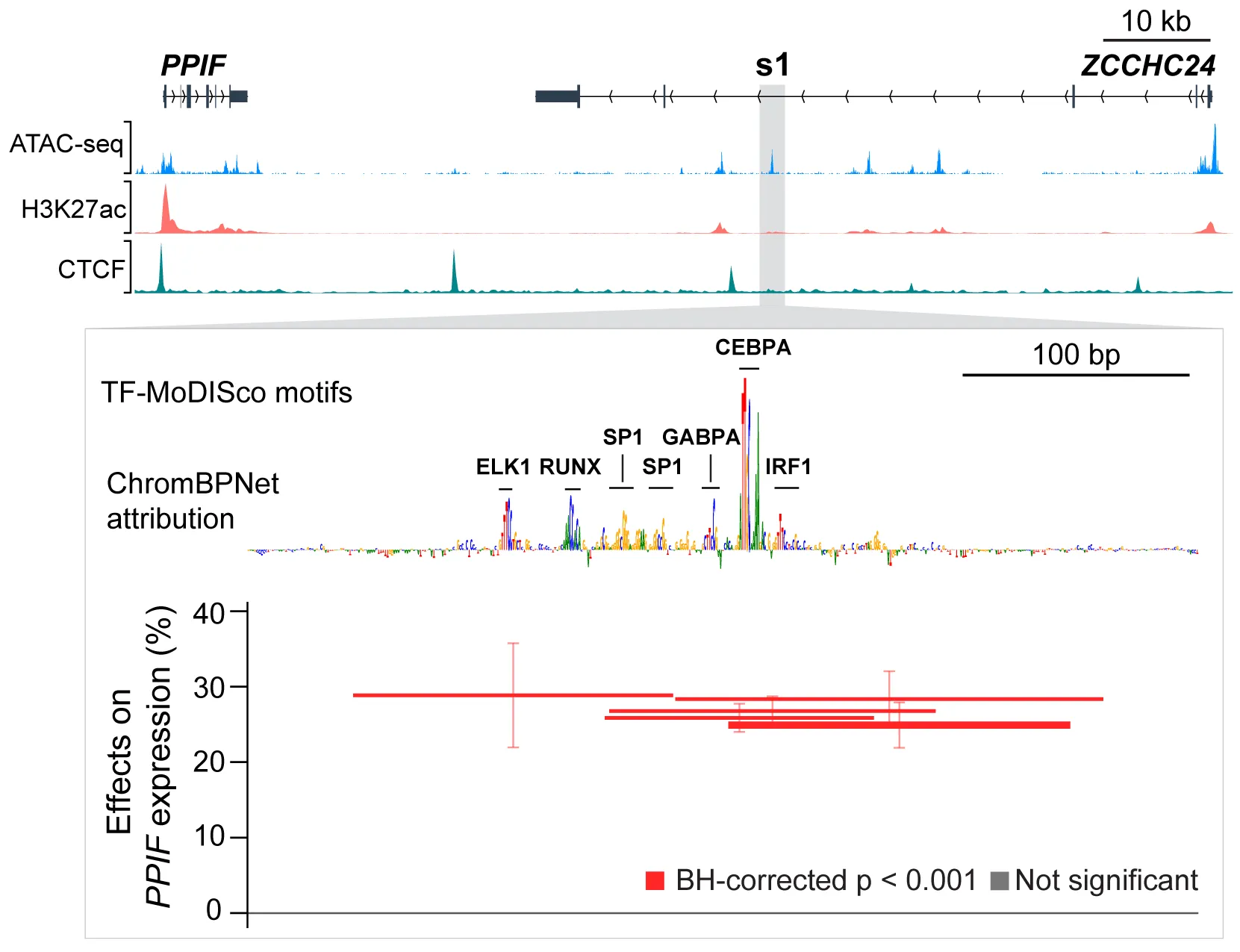
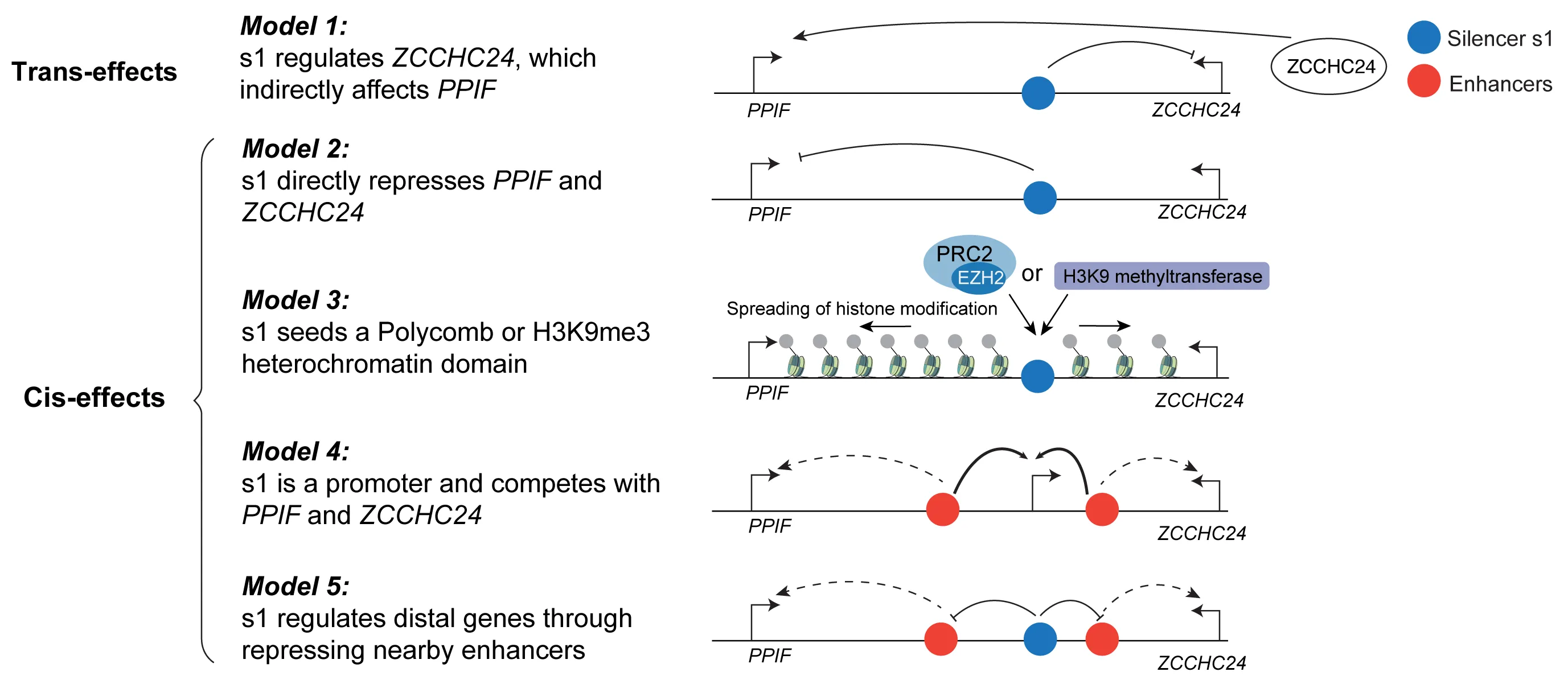
To us, the most surprising discovery was a distal silencer 60 kb from PPIF, which we called s1, where every deletion led to a ~30% increase in PPIF expression. Is it really a silencer? How does it regulate a gene 60 kb away? What’s the mechanism of repression? We tested the five most likely models one by one.
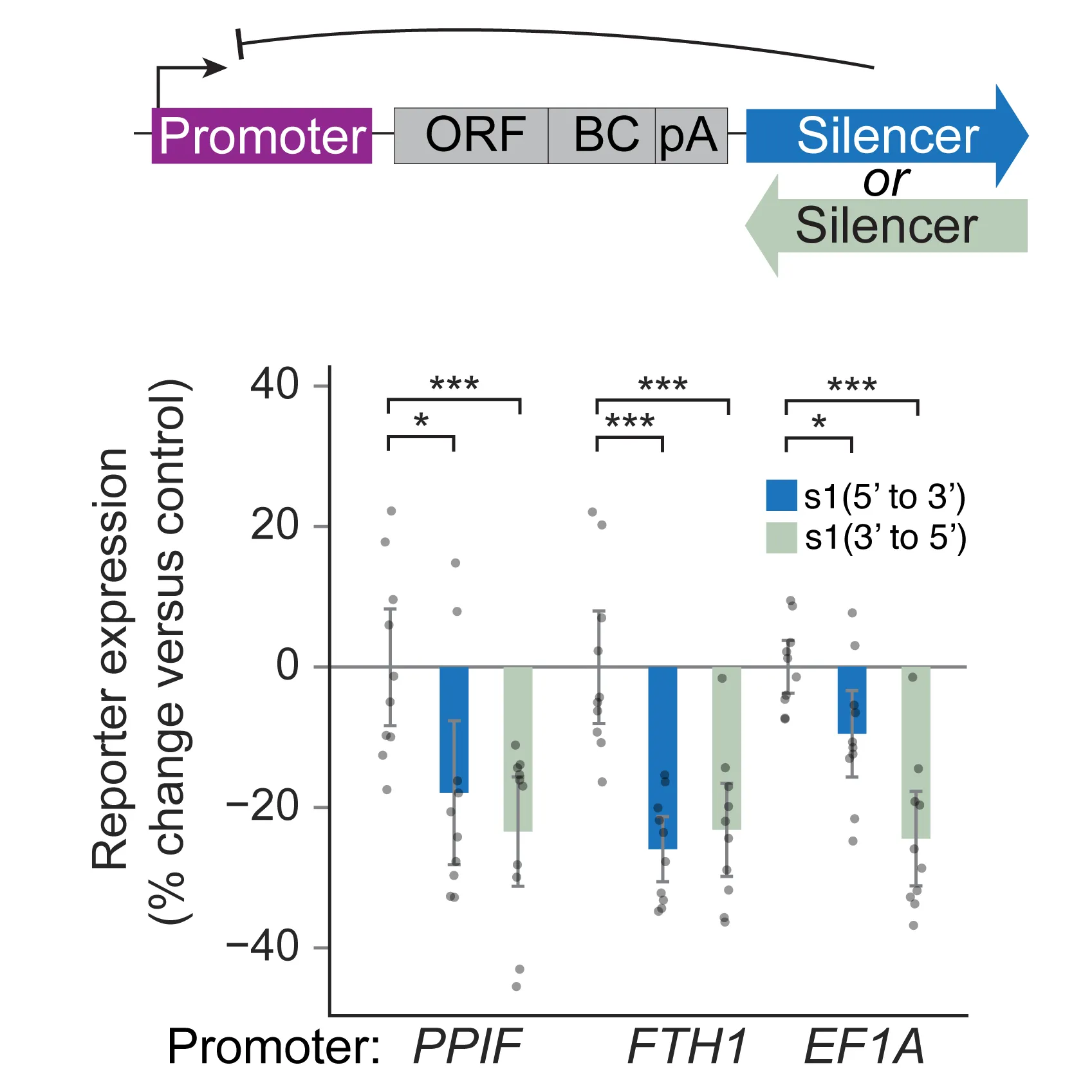
First, is s1 repressive? We cloned it into a lentiMPRA construct in both orientations, paired with three promoters of different strengths. s1 is sufficient to repress all three promoters, by up to 25%, in both orientations.
Then we ruled out four of the models:
- s1 is unlikely to act on PPIF through the neighboring gene ZCCHC24, since both raising and lowering ZCCHC24 increase PPIF (model 1 ❌).
- s1 has no focal contact with PPIF (model 2 ❌).
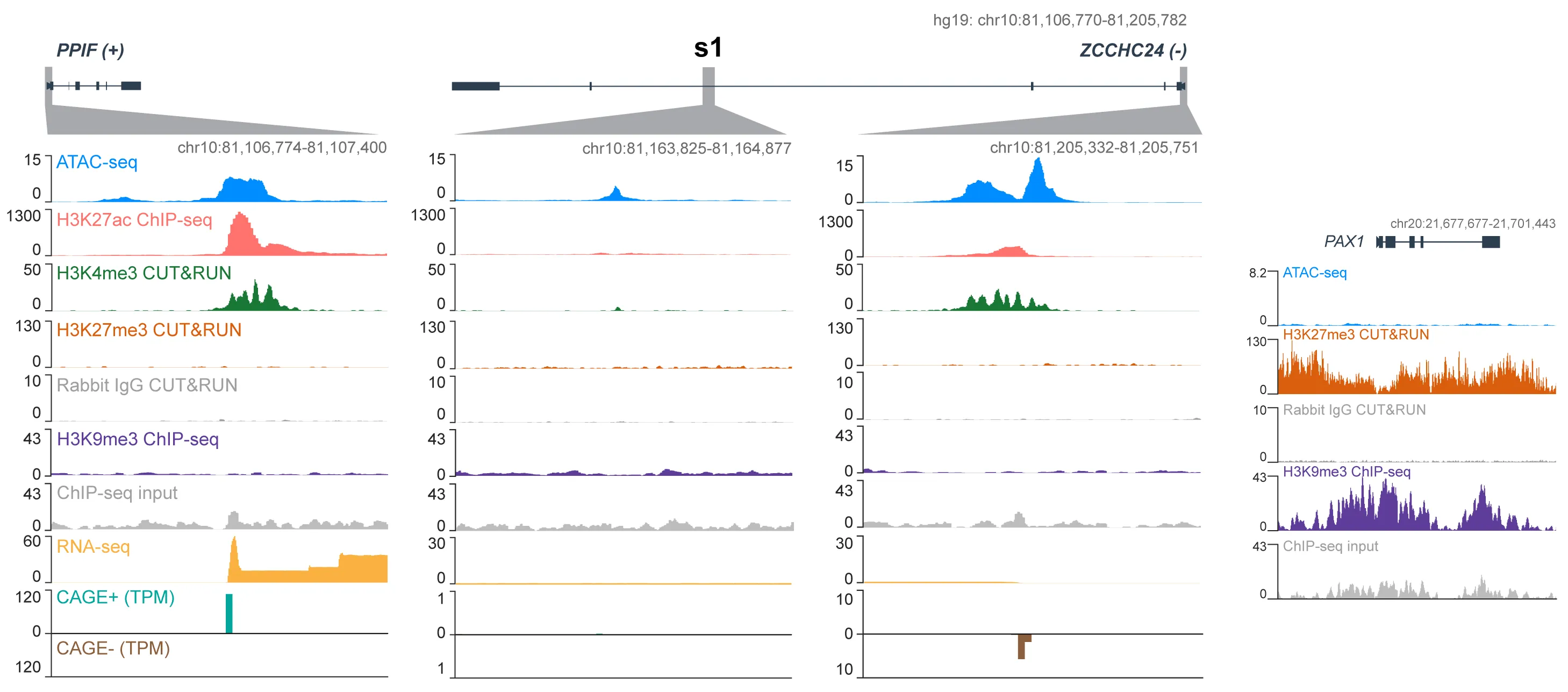
- s1 isn’t enriched for H3K9me3 or H3K27me3 (model 3 ❌).
- s1 isn’t transcribed, so it’s unlikely to be a promoter competing with PPIF (model 4 ❌).
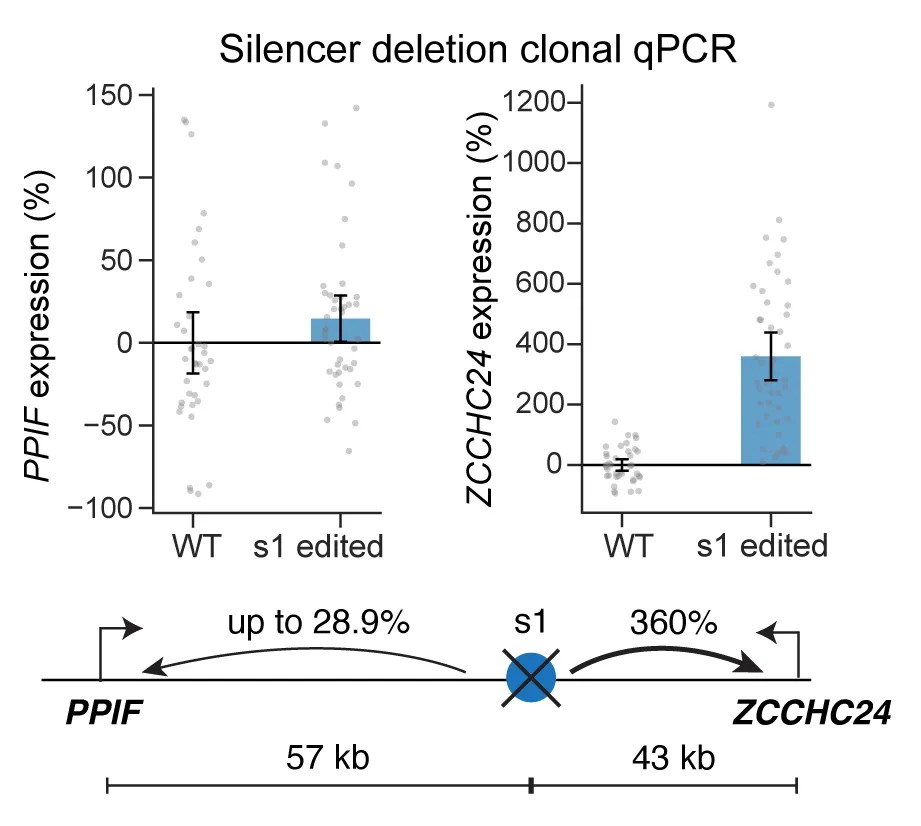
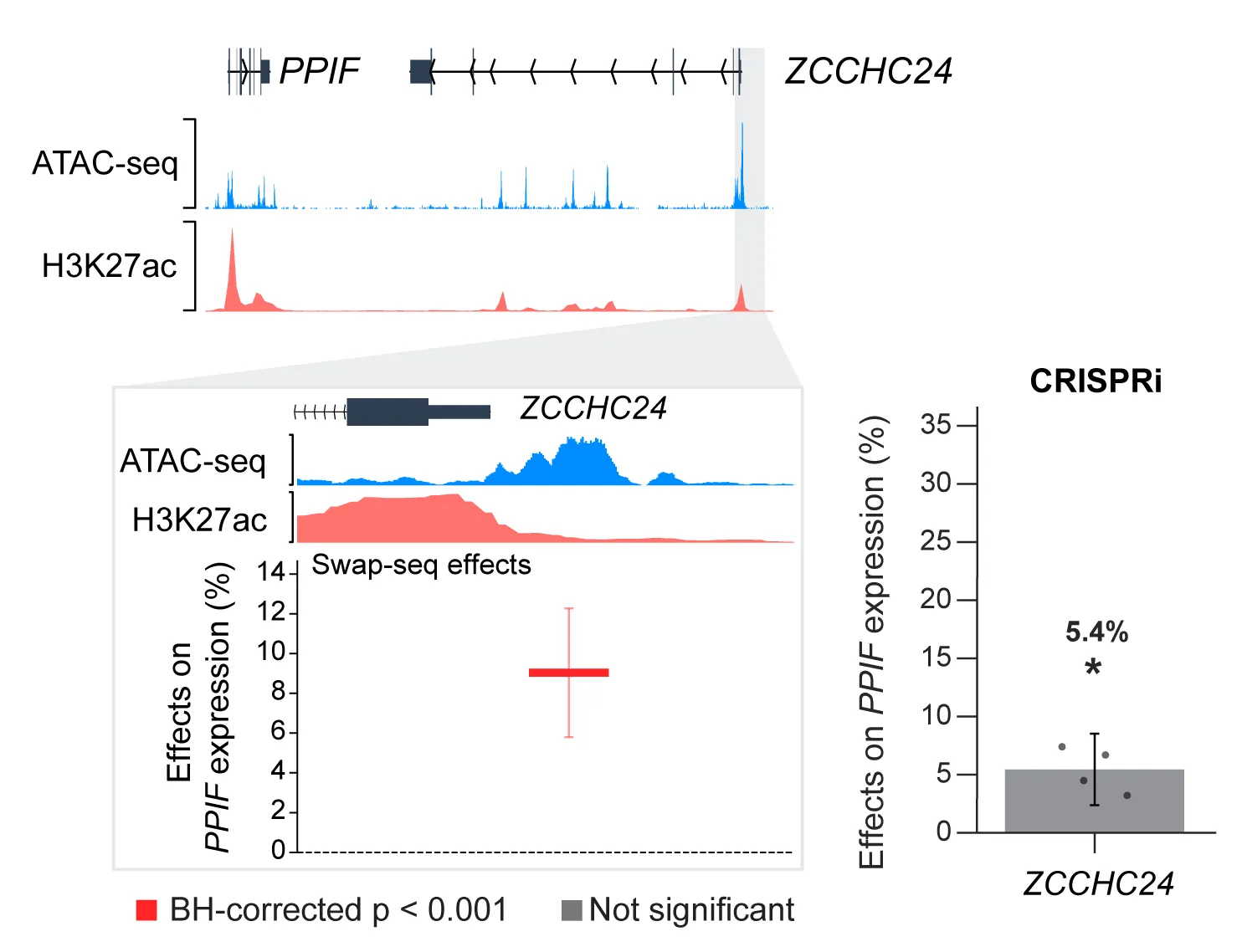
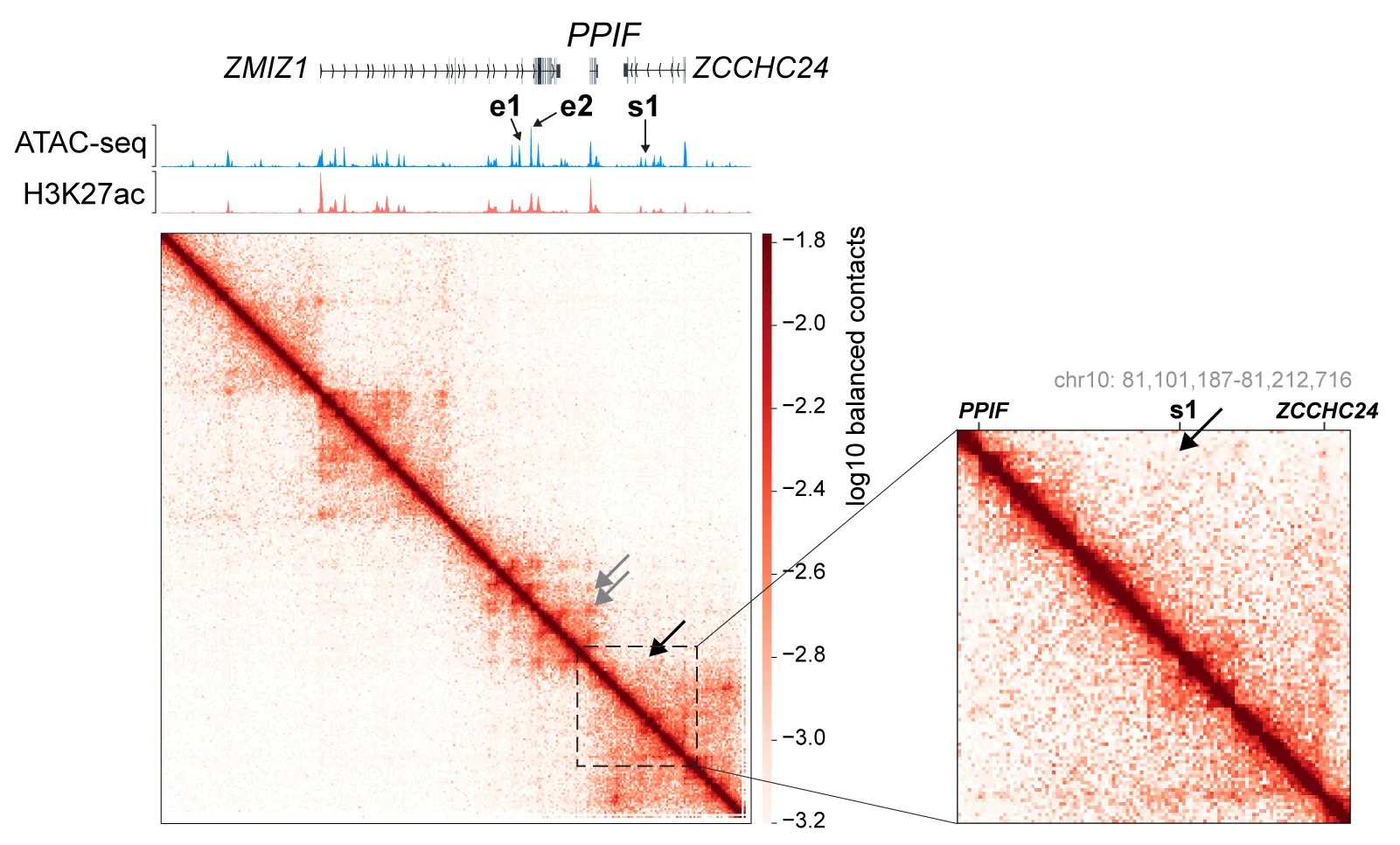
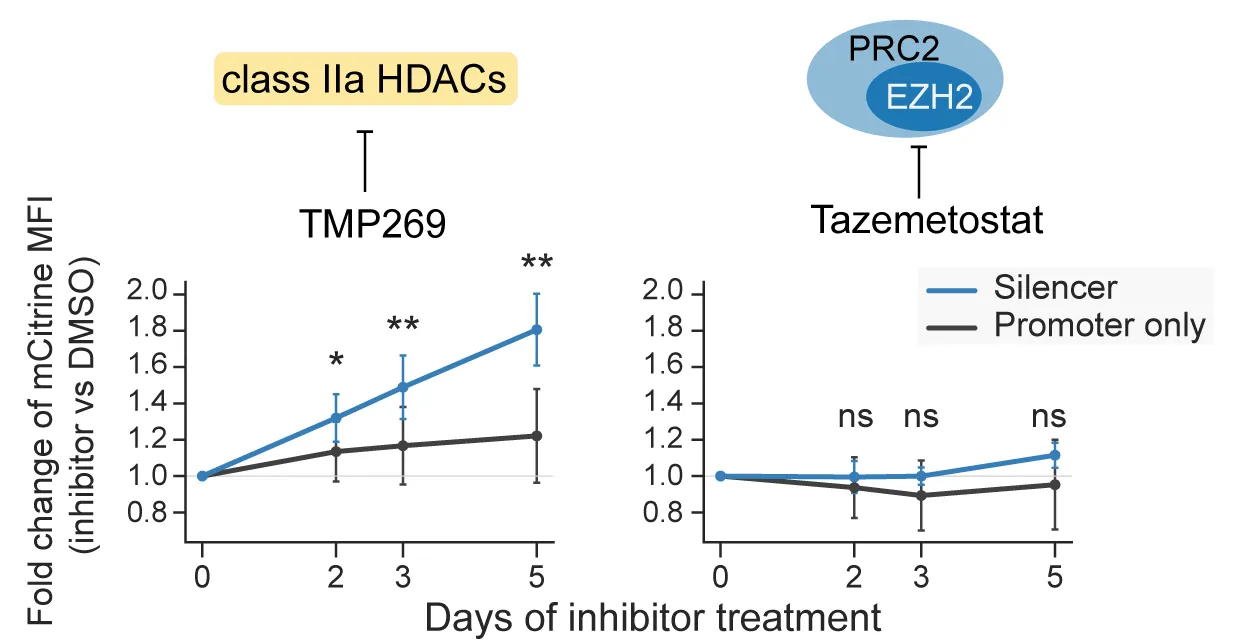
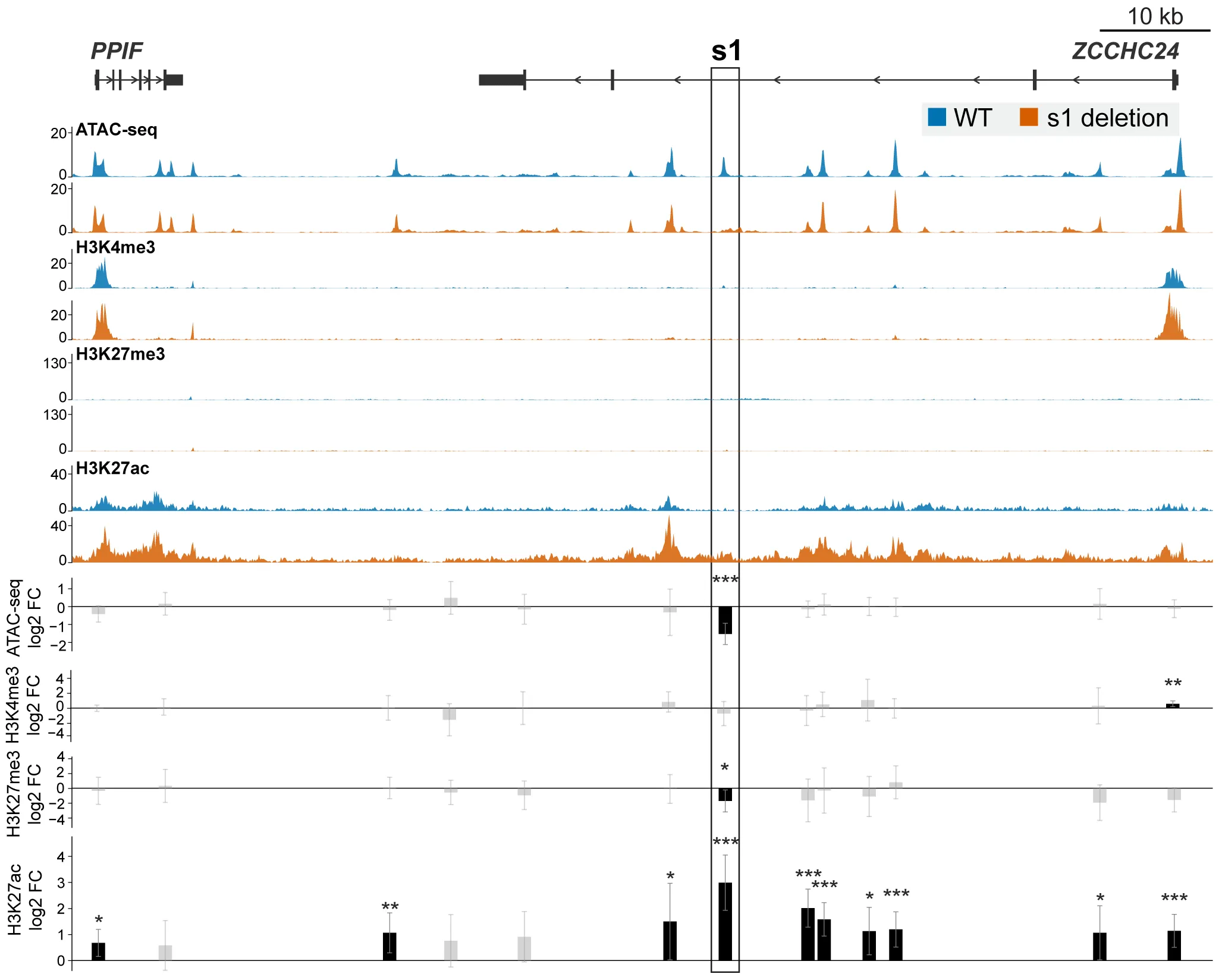
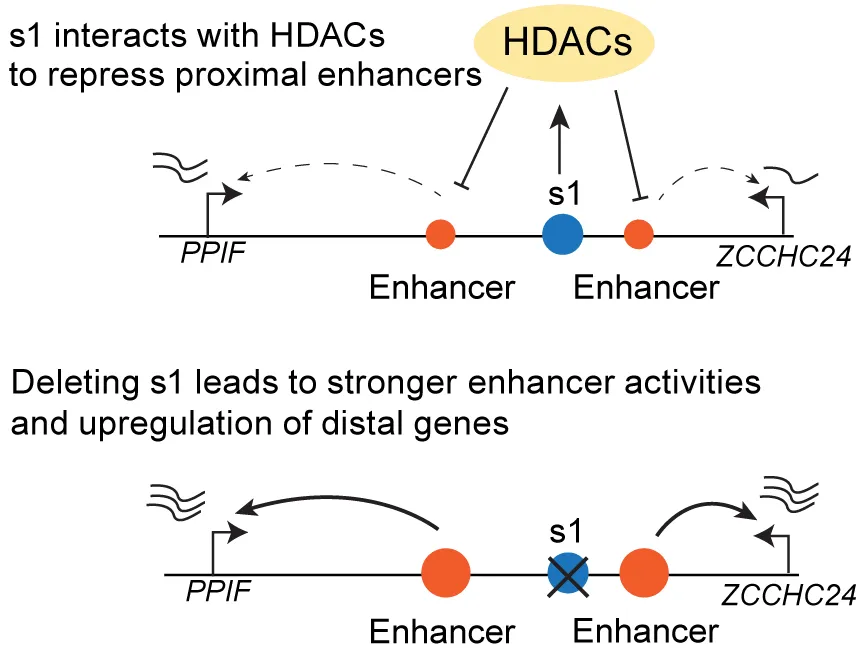
So how does s1 work? It appears to be an HDAC-dependent silencer that can be inhibited by drugs such as TMP269. Deleting it endogenously led to significant increases in H3K27ac at neighboring accessible peaks within 30 kb. s1 locally represses nearby enhancers, and through them regulates distal genes (model 5 ✅).
More silencers across the genome?
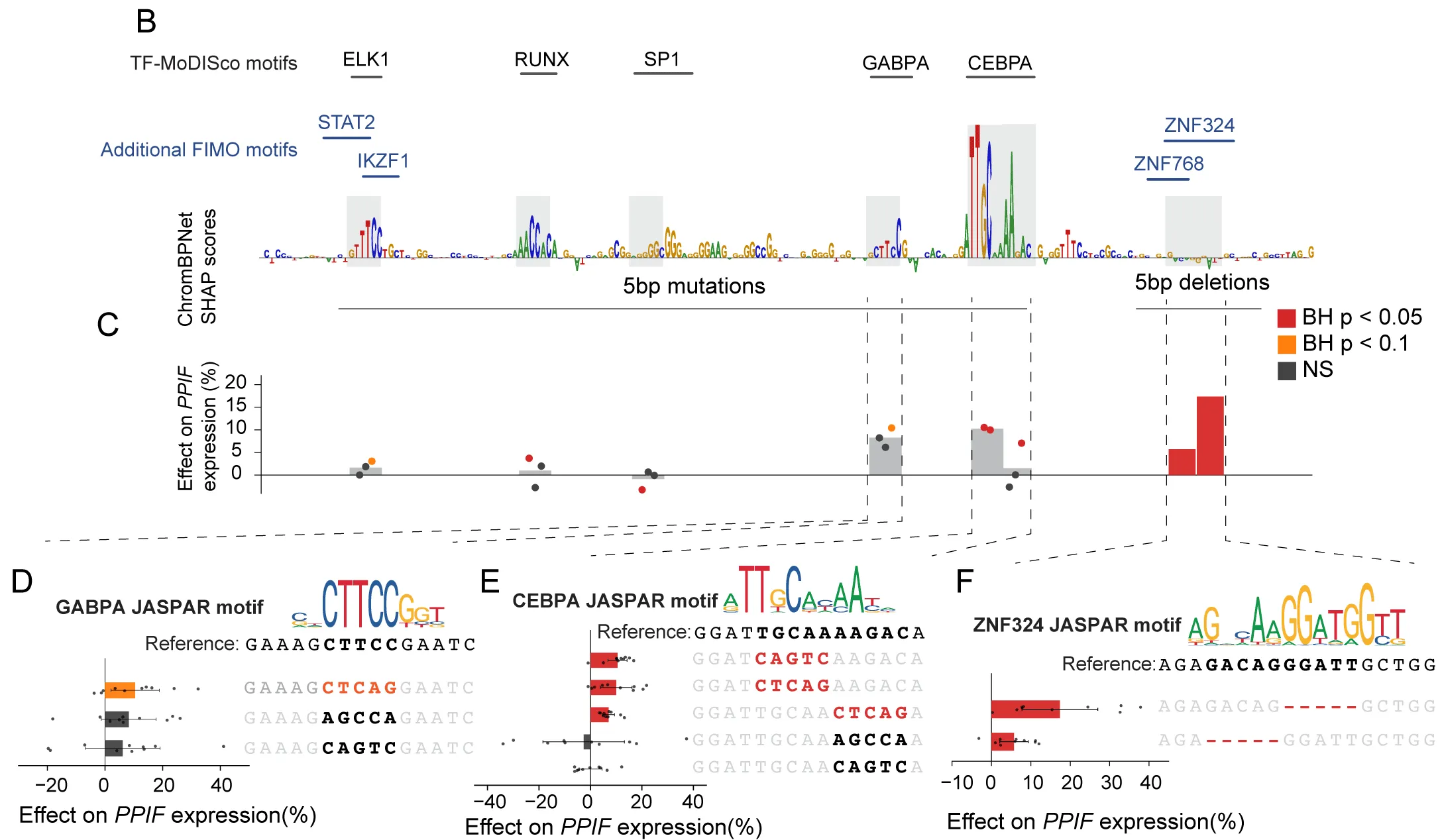
Having found one silencer working through an intriguing mechanism, we wondered whether there are more like it in the genome. Using Variant-EFFECTS, we dissected the s1 sequence and identified important transcription factor binding sites, including RUNX, GABPA, CEBPA, and a zinc-finger motif.
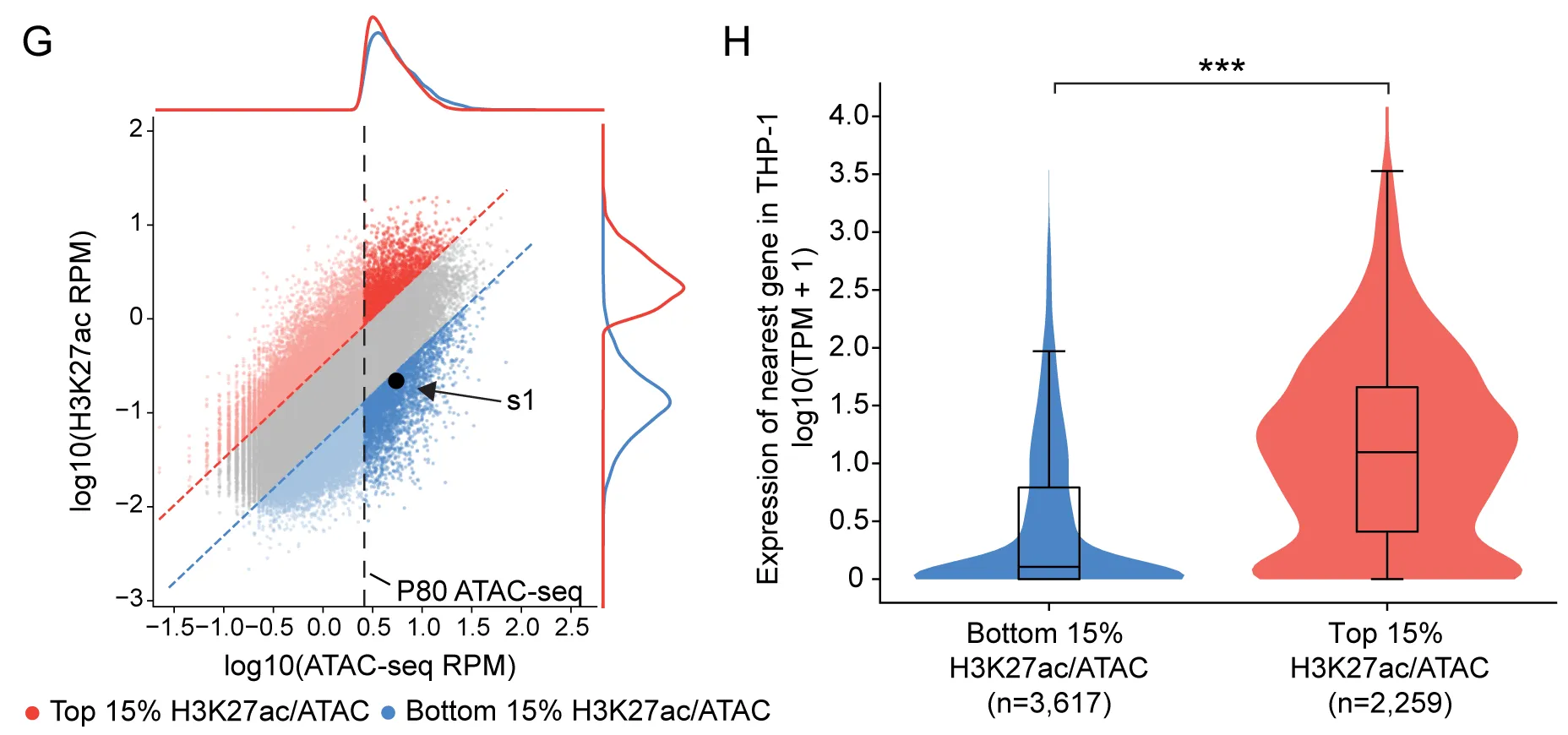
Using these motifs, we found hundreds of other candidate silencers that share similar chromatin features: rather than particular repressive marks, they have low H3K27ac but high accessibility. Genes near these silencer-like peaks tend to have lower expression.
A benchmark for sequence-to-function models
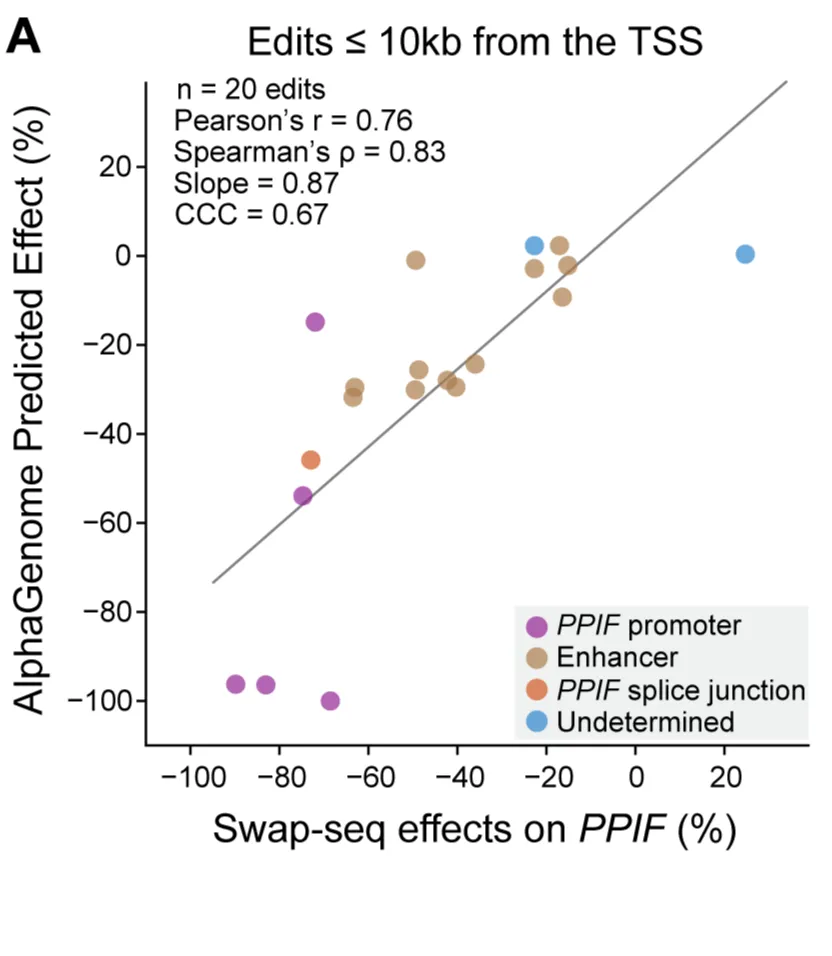
DNA sequence models like AlphaGenome could be transformative, but they are difficult to evaluate. We used Swap-seq to benchmark three models: they can interpret deletions very close to the promoter, but almost entirely fail to recognize distal elements, including the silencer.
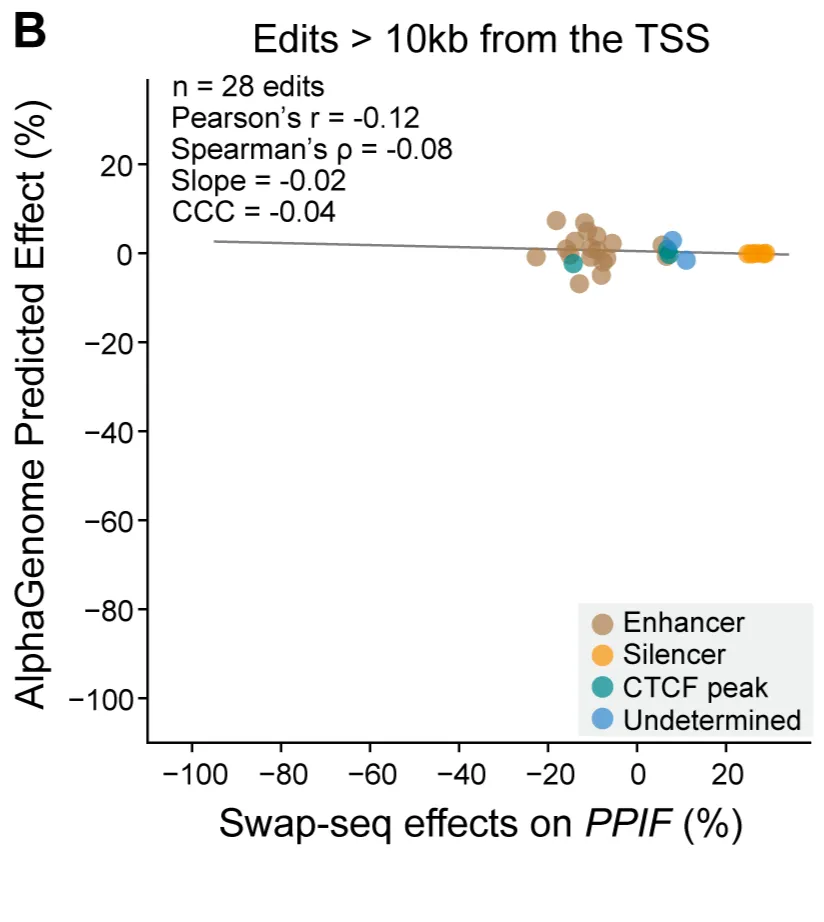
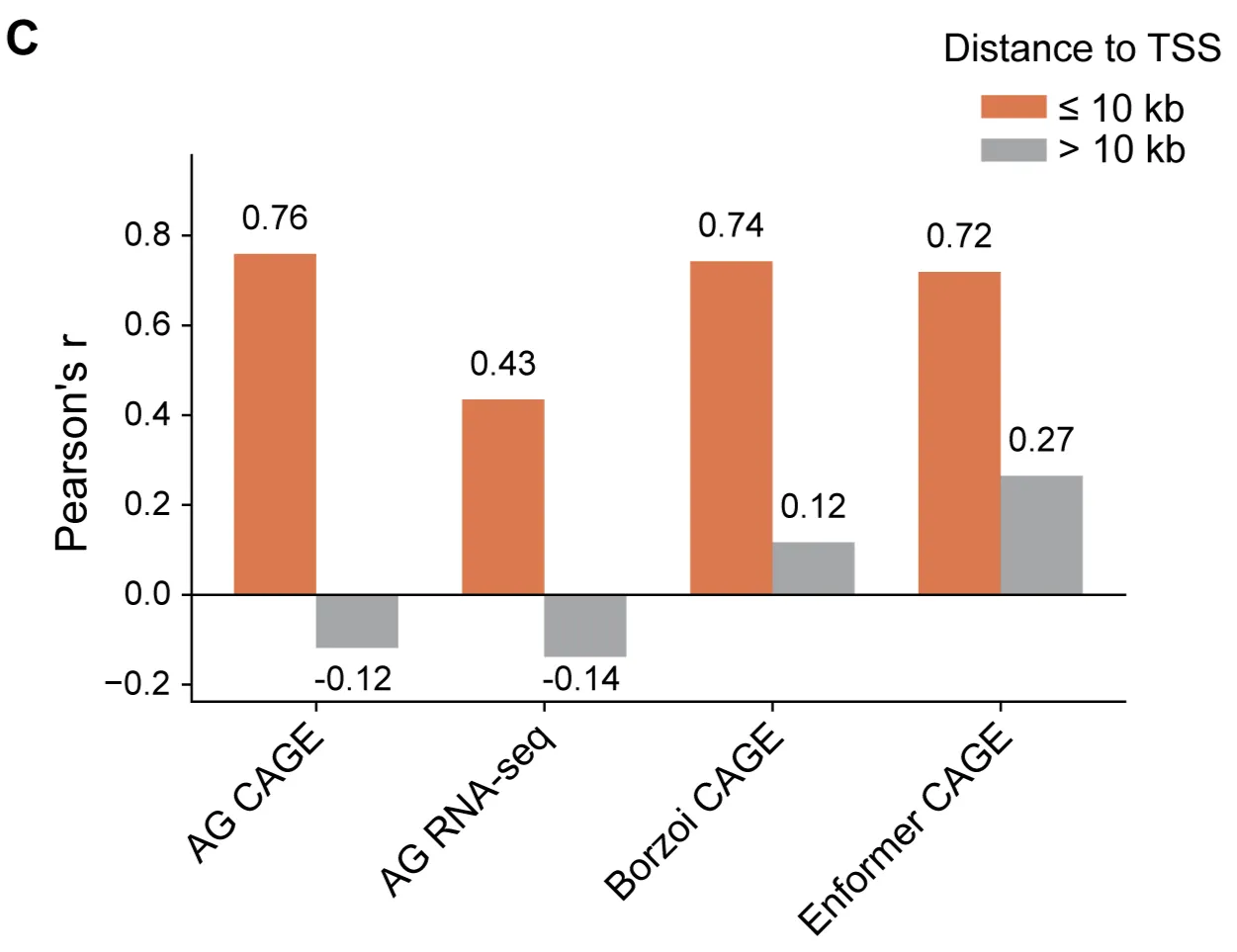
In summary, Swap-seq can discover regulatory elements across mechanistic classes, reveal sequence-based rules, and generate datasets for evaluating and improving sequence-to-function models. It is applicable to many genes, cell types, and kinds of sequences — we’re excited to help set it up in your favorite system!
Thank you
Huge thanks to all my collaborators — Michael Montgomery, Masahiro Nagano, Ashna Nisal, Zhengxi Gu, Ziwei Chen, Kamal Obbad, Ruchir Rastogi, Jason Tan, Tony Zeng, Maya Sheth, Coco Xia, Shannon Chiang — and everyone who helped along the way.
Special thanks to Mike Montgomery, who conceived the idea of Swap-seq and babysat me at the start of grad school. Mike is such a creative scientist, an outstanding mentor, and, above all, a fierce friend. Thank you, Mike (and the Variant-EFFECTS team)!

Read the preprint.